PCR
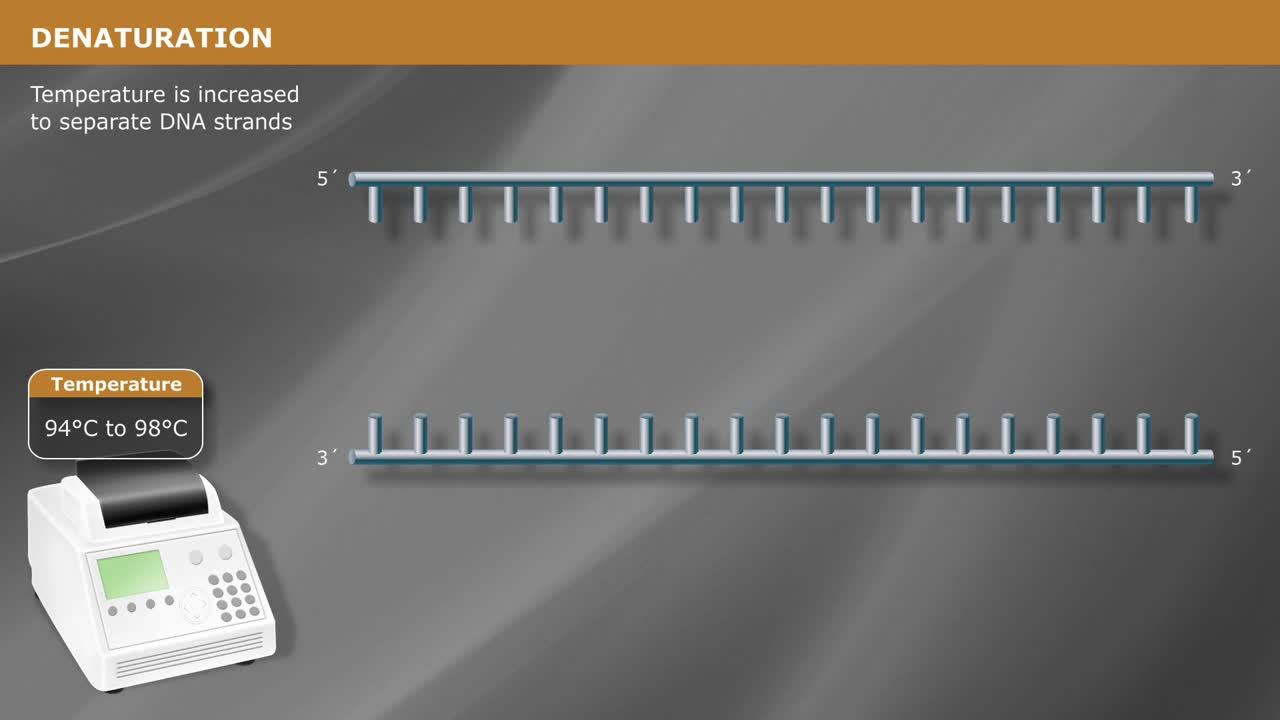
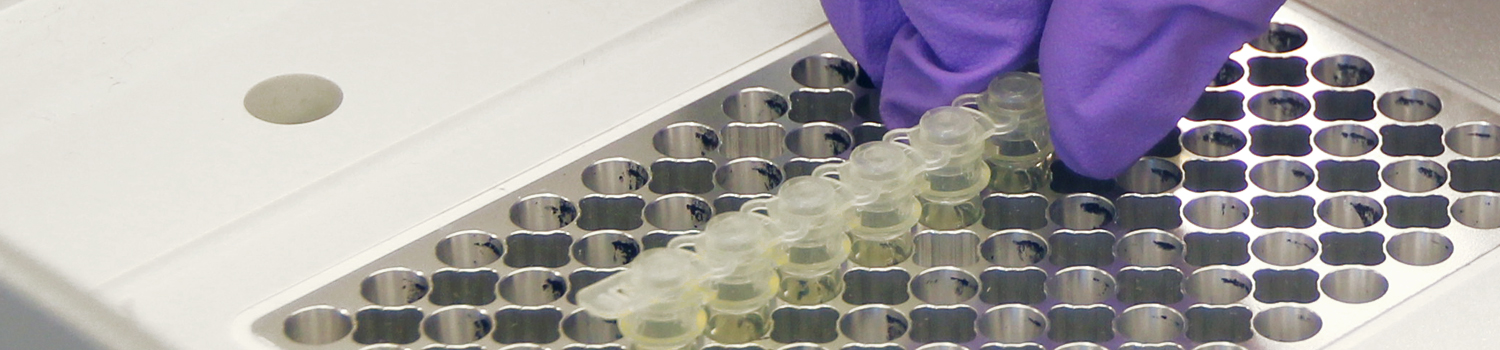
Once the strands are separated, the temperature is decreased to the annealing temperature to allow the primers to base pair (or anneal) to complimentary regions of the template. The annealing temperature (typically between 48-72°C) is related to the melting temperature (Tm) of the primers and must be determined for each primer pair used in PCR. During the extension step (typically 68-72°C) the polymerase extends the primer to form a nascent DNA strand. This process is repeated multiple times (typically 25-35 cycles). And because each new strand can also serve as a template for the primers, the region of interest is amplified exponentially. The final step of the PCR is generally a longer, single temperature step (often 5-10 min at 68-72°C) that allows for the completion of any partial copies and the clearance of all replication machinery from the nascent DNA. Once the PCR is complete, the thermal cycler is set to 4°-10°C to maintain product integrity until such time as the tubes can be removed from the machine.


Choose Type:
- Comet Assay - Modified for Detection of Oxidized Bases Using the Repair Endonucleases Fpg, hOGG1 and Endonuclease III (Nth)
- Control Reaction Protocol for PreCR Repair Mix
- Sequential Reaction Protocol for PreCR Repair Mix
- Standard Reaction Protocol for PreCR Repair Mix
- Loop-mediated Isothermal Amplification (LAMP)
- Luna® Universal qPCR Master Mix Protocol (NEB #M3003)
- Luna® Universal Probe One-Step RT-qPCR Kit Protocol (E3006)
- Luna® Universal Probe qPCR Master Mix Protocol (M3004)
- Loop-mediated Isothermal Amplification (LAMP) Protocol using Bst-XT WarmStart™ DNA Polymerase (Glycerol-free)
- Luna® Probe One-Step RT-qPCR Kit (No ROX) Protocol (NEB# E3007)
-
Understanding Variability in DNA Amplification Reactions
-
Anatomy of a Polymerase - How Function and Structure are Related
Read about the relationship between Polymerase structure and function when copying DNA.
-
Polymerase Fidelity: What is it, and what does it mean for your PCR?
- PCR Reagents Brochure
- Molecular Cloning Technical Guide
- Polbase
- DNA Polymerase Selection Chart
- Taq PCR Kit Troubleshooting Guide
- PCR Troubleshooting Guide
- Guidance on Choosing Sample Input Amounts when Using the Monarch Total RNA Miniprep Kit
- Guidelines for PCR Optimization with OneTaq® and OneTaq® Hot Start DNA Polymerases
- Guidelines for PCR Optimization with Taq DNA Polymerase
- Guidelines for PCR Optimization with Thermophilic DNA Polymerases
- General Guidelines for Successful RNA Purification Using the Monarch Total RNA Miniprep Kit
Feature Articles
Brochures
Web Tools
Selection Tools
Troubleshooting Guides
Usage Guidelines
- Vladimir Potapov, Jennifer L. Ong. (2017) Examining Sources of Error in PCR by Single-Molecule Sequencing. PLOS One; PubMedID: 28683110
Products and content are covered by one or more patents, trademarks and/or copyrights owned or controlled by New England Biolabs, Inc (NEB). The use of trademark symbols does not necessarily indicate that the name is trademarked in the country where it is being read; it indicates where the content was originally developed. All other trademarks are the property of their respective owners. The use of this product may require the buyer to obtain additional third-party intellectual property rights for certain applications. For more information, please email busdev@neb.com.
This product is intended for research purposes only. This product is not intended to be used for therapeutic or diagnostic purposes in humans or animals.