Molecular Cloning Technology - Past, Present and Future
Gregory J. S. Lohman, Sean Lund, Stephanie M. Khairallah, Andrew P. Sikkema, S. Kasra Tabatabaei, New England Biolabs®
Since the 1970s, the evolution of molecular cloning has fundamentally changed the study of biology and spurred progress throughout the life sciences. The discovery of restriction endonucleases ─ enzymes that site–specifically cut molecules of DNA ─ gave scientists the tools to create the first recombinant DNA molecules. In the decades since, new technologies for DNA manipulation, sequencing and synthesis have driven exponential growth in molecular biology and biotechnology applications and are now fundamental to biological research. Modern DNA cloning methods take the technology even further, enabling researchers to seamlessly stitch together multiple DNA fragments in a single reaction, clone ever larger sections of DNA, generate fully synthetic molecules designed in silico, and more. These advances facilitate the high-throughput construction of DNA clones, accelerating the development of biotechnology applications including gene therapy, vaccine development, biomaterials, fully engineered organisms, and more.
Introduction
Molecular cloning involves inserting a DNA sequence of interest into an engineered plasmid, referred to as a “vector”, to allow its propagation within a suitable host organism. The host then produces additional copies of the vector, along with its inserted DNA, as it replicates. Depending on the host strain and vector design, the inserted DNA can be used in numerous applications, including protein expression or host genome editing. The amplified vector can also be isolated from the host and used for in vitro applications, such as sequencing or mutagenesis. The technologies used to manipulate and clone DNA have advanced massively over five decades, and modern applications can involve the assembly of entire gene pathways, or even synthetic chromosomes and genomes.
This review provides an overview of cloning methodologies, from foundational restriction enzyme-based techniques to the wide array of cloning technologies that have emerged in recent decades. Finally, we discuss methods of scarless multi-fragment DNA assembly and high-throughput automation of cloning – advancements that continually enhance the ease and speed of DNA manipulation.
Restriction Enzyme-Dependent Cloning
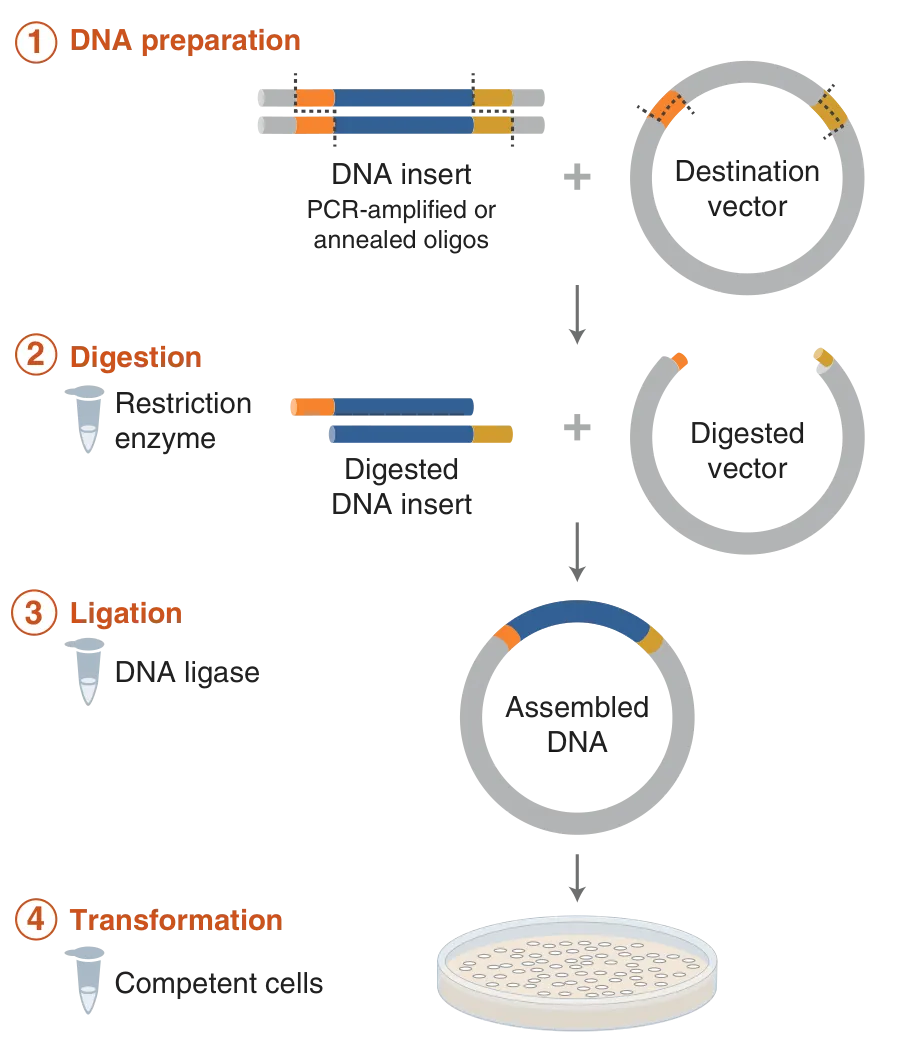
The classic restriction cloning workflow, summarized in Figure 1, involves several steps:
DNA Isolation and Purification: Obtaining clean, high-quality DNA for use in downstream cloning steps
Digestion: Isolating DNA “insert” fragments using restriction enzymes
Ligation: Inserting fragments into a suitable cloning vector containing complementary restriction endonuclease sites and prepared in a similar manner to the insert.
Transformation: Introducing recombinant vectors into a host cell to enable DNA propagation
Selection and Screening: Identifying host cells containing the intended recombinant plasmid.
Developed across multiple laboratories in the late 1960s and early 1970s and refined in the years since, these steps precipitated a revolution in biology, laying the groundwork for modern molecular biology, biotechnology and synthetic biology.
DNA Isolation and Purification: Isolation and purification of genomic DNA, digested fragments, and recombinant products are critical for successful cloning workflows. DNA must be separated from undesired components, including nucleic acids not of interest, buffer/cell lysate components that can interfere with downstream reactions, and enzymes from previous steps. DNA purification methods such as alcohol precipitation and phenol-chloroform extraction have been in use since the early 1950s (1). Later, gel purification methods allowed size selection along with purification. In the late 1980s, silica was introduced as a surface for absorbing DNA (1). This innovation led to silica-based DNA extraction and purification methods, which offer a safer alternative by eliminating harsh organic solvents. Today, these methods are commonly offered in a spin column format, which enhances speed, allows for size selection and is compatible with automation. Currently, multiple commercial silica column-based purification methods are available, with protocols and columns optimized for DNA of different sizes and structures. Plasmid miniprep kits, available as single tubes and even 96-well plates, have greatly simplified DNA isolation and purification. Moreover, magnetic sample purification beads coated with carboxyl groups (e.g., Solid Phase Reversible Immobilization (SPRI) beads) or silica, are a rapid and convenient way to purify nucleic acids via bead binding, washing, and eluting the DNA back into clean buffer (2,3).
Digestion: The discovery of nucleases possessing site-specific DNA cleavage activity originated from observations made in the early 1950s (4). Researchers studying bacteriophages (viruses that infect bacteria) noticed a peculiar phenomenon: a bacteriophage’s ability to replicate in a bacterial host depended on which bacterial strain it had previously been grown in. The molecular explanation of this phenomenon turned out to be restriction modification systems, which are widely used by bacteria to detect and degrade foreign DNA, like that of a phage. The system consists of two key enzymes: a restriction enzyme (an endonuclease) that cuts specific DNA sequences, and a methylase that modifies the bacteria’s own DNA, protecting it from being cut. Bacteriophage DNA lacking the host-specific methylation pattern is recognized as foreign and degraded by the restriction enzyme. However, in cases where the phage DNA escapes restriction, the newly replicated phage DNA acquires the host’s methylation pattern, disguising it as “self” DNA upon re-infection of the same host strain.
The protein responsible for this activity was not discovered until 1968, when Arber and Linn isolated the first restriction enzymes, which selectively cut exogenous DNA, while sparing the host bacterium’s genomic DNA (5). These studies also identified a DNA methylase enzyme that protects the host DNA from restriction activity. This enzyme was not useful for cloning because it lacked sequence specificity. The first sequence-specific restriction enzymes, HindII and HindIII, were isolated from Haemophilus influenza (6,7). These enzymes, now known as Type IIP (“palindromic”) enzymes, cut DNA within specific 6 base pairs, nearly symmetric, “recognition” sequences (GTYRAC and AAGCTT). Upon cutting, these enzymes generate short self-complementary single stranded DNA (ssDNA) overhangs commonly used in cloning protocols.
Thousands of restriction enzymes targeting hundreds of recognition sequences have since been identified [for a complete list, visit REBASE® at rebase.neb.com]. Today, researchers have access to hundreds of these enzymes as high-purity, high-concentration recombinant proteins from commercial sources, including engineered, high-fidelity enzymes with optimized buffers and protocols (8) permitting flexible, accurate and rapid DNA cleavage.
Ligation: In the early 1960s, the study of genetic recombination and the lambda phage life cycle indicated the existence of an activity that joins DNA ends independent of replication (9-11). Over the next few years, several groups independently isolated these DNA ligases and demonstrated their ability to assemble DNA in vitro by joining a 3′-hydroxyl to a 5′-phosphorylated DNA terminus (12-16).
With enzymes capable of specifically cutting and ligating DNA in hand, the generation of recombinant DNA ─ DNA from two different sources ─ was now possible. In 1972, Paul Berg and colleagues generated SV40 phages containing inserted DNA from lambda phage and E. coli genomes, producing the first recombinant DNA molecules (17). T4 DNA Ligase, known for its high activity on both short complementary ssDNA overhangs (commonly referred to as ‘cohesive’ or ‘sticky’ ends) and fully base-paired (blunt ends), soon became the enzyme of choice in traditional cloning protocols, often enhanced with buffers containing the crowding agent polyethylene glycol (PEG) (18-21).
Transformation: Recombinant DNA technology relies on the ability to “transform” bacteria – introducing foreign genetic material into the bacterial cytoplasm. While the transforming principle was described in the first half of the 20th century (22,23), it was not until the 1970s that Mandel and Higa demonstrated that common laboratory strains of E. coli could be made chemically “competent” (possessing increased ability to take up DNA from solution) by treatment with calcium chloride and heat shock (24). This treatment temporarily opens pores in the cell membranes, allowing DNA to enter more freely.
Since the discovery of chemical competency, transformation technology has evolved even further. Electroporation, developed in the 1980s, allows DNA uptake via pores induced in bacterial membranes by an electric field (25). Advances in understanding the E. coli genome have led to the development of laboratory strains engineered to minimize recombination, increase stability of recombinant DNA, tolerate toxic sequences, allow for blue/white screening of vectors, control the methylation state of propagated DNA, and other modifications that improve propagation of a range of recombinant sequences (26,27). For example, dam-/dcm- competent cells prevent methylation of corresponding sites on DNA, allowing digestion of E. coli-propagated plasmids by enzymes that would be blocked by these modifications. RecAI strains have inactivated recA genes to prevent homologous recombination, decreasing the chance of undesired modifications to constructs. And restriction enzyme-free systems make it easier to transform and propagate unmodified DNA (28). Manipulation of the E. coli genome has also driven improvements in recombinant protein expression. A genome encoded copy of the T7 RNA polymerase gene is commonly used to drive efficient protein production (29), and many protein production strains have reduced protease activity. Today, many cloning and expression strains are in use that can be made competent and stored at reduced temperature while retaining their enhanced transformation ability (30).
Selection and Screening: While antibiotic resistance provided by the cloning plasmid indicates successful transformation, confirming that the cloned DNA contains the desired recombinant insert requires additional steps. Counterselection systems were developed to visually identify “empty” vectors – plasmids that have ligated without incorporating an insert. One of the best-known screening methods is the “blue/white screening” system (31,32), in this system, plasmids carry a fragment of the lacZ gene (the alpha fragment), which can complement a partner omega fragment in the host genome to form a functional enzyme, β-galactosidase. This enzyme breaks down X-gal, a synthetic substrate in the growth media, producing a blue color. If a recombinant DNA insert is present, it disrupts the lacZ alpha fragment, preventing enzyme formation. As a result, colonies with inserts appear white, while those without inserts remain blue. This approach greatly accelerates the identification and isolation of colonies containing the recombinant construct.
Demonstrating that a plasmid contains an insert does not guarantee the presence of the correct insert with the desired sequence. Early methods to confirm the presence of the desired insert relied on restriction enzyme analysis (33). By using specific enzymes to cut the insert into fragments of known size, diagnostic digests could verify that the expected insert was present. The development of the chain terminator-based Sanger method of DNA sequencing enabled easier sequence-based screening (34). Once cloned, scientists could sequence the constructs to confidently identify the correct recombinant molecules, greatly enhancing the reliability of molecular cloning.
Putting it all together. Sequential digestion, ligation and transformation of a recombinant DNA molecule was first executed by Boyer, Cohen and Chang in 1973 (35). They digested the plasmid pSC101 with EcoRI, ligated an insert fragment with compatible ssDNA overhangs, and transformed the resulting recombinant molecule into E. coli, conferring tetracycline resistance to the bacteria, demonstrating the complete restriction enzyme cloning workflow. In the years since, thousands of researchers have made countless recombinant DNA molecules for a wide range of applications. But, even beyond the innovations described above, cloning technology has not stood still. New methods for generating recombinant DNA, new approaches for obtaining input DNA fragments, and new applications have continued to expand the speed, ease of use, and flexibility of recombinant DNA generation.
Cloning Vector Design
Scientists soon recognized the need for a general cloning plasmid – a compact circular DNA vector with a multiple cloning site (MCS) containing several closely spaced restriction sites for flexible choice of enzyme to linearize the vector, thereby allowing easy insertion of foreign DNA; an origin of replication for bacterial propagation; and an antibiotic resistance gene for selecting bacteria that carry the recombinant vector. To meet this need, Boyer and colleagues described the first vector designed for cloning purposes in 1977, pBR322 (36), an approximately 4 kb DNA plasmid with two antibiotic markers to facilitate propagation and selection within E. coli.
Today, hundreds of standardized vectors exist, covering a wide range of applications (37-40). The ability for users to customize vectors means that the number of useful designs is practically unlimited. Vectors can be customized for many organisms, with origins of replication, selection markers, promoters, tags and other elements chosen for compatibility with the host organism. Vectors can be designed for DNA storage, RNA transcription, protein expression, or for integrating DNA into the host genome. Vector copy number, of the number plasmid molecules present in each cell, can also be controlled; for example, the commonly used pUC plasmids have mutations that cause the plasmid to replicate at a very high copy number, making the propagation of high-quality DNA in large quantities routine (41).
For applications such as the propagation of large or toxic DNA sequences, low copy number origins of replication are used to reduce the burden on the cell. For example, plasmids with an origin derived from the bacterial conjugation F plasmid, also known as fosmids, maintain recombinant DNA at a single copy per cell. This design permits the propagation of large DNAs containing multiple genes up to 100s of kB in size (42,43). Copy number-inducible plasmids offer the best of both worlds, allowing difficult-to-replicate DNA to be maintained at low copy number during cell division but induced to high levels before isolation (44).
Cloning efficiency and versatility have also been improved by the development of techniques for preparing vectors prior to ligation. Alkaline phosphatases were isolated that can remove the 3´ and 5´ phosphate groups from the ends of nucleic acids (45,46). It was discovered that treating vectors with one of these enzymes, Calf Intestinal Phosphatase (CIP), dephosphorylated DNA ends and prevented self-ligation of vectors cut with a single restriction enzyme, increasing recovery of plasmids with inserts.
However, CIP proved difficult to inactivate, and any residual activity could lead to dephosphorylation of the insert DNA and inhibition of the ligation reaction. The discovery of heat-labile alkaline phosphatases, such as recombinant Shrimp Alkaline Phosphatase (rSAP) and Antarctic Phosphatase (AP) decreased the steps and time involved, as a simple shift in temperature inactivates the enzyme prior to the ligation step (47-50). Phosphatase technology was further improved with the development of recombinant Quick CIP, a heat-labile version of Calf Intestinal Alkaline Phosphatase that can dephosphorylate DNA ends in as little as 10 minutes and without the need for extra additives (e.g., Zn2+) required by AP (51).
The Impact of the Polymerase Chain Reaction (PCR)
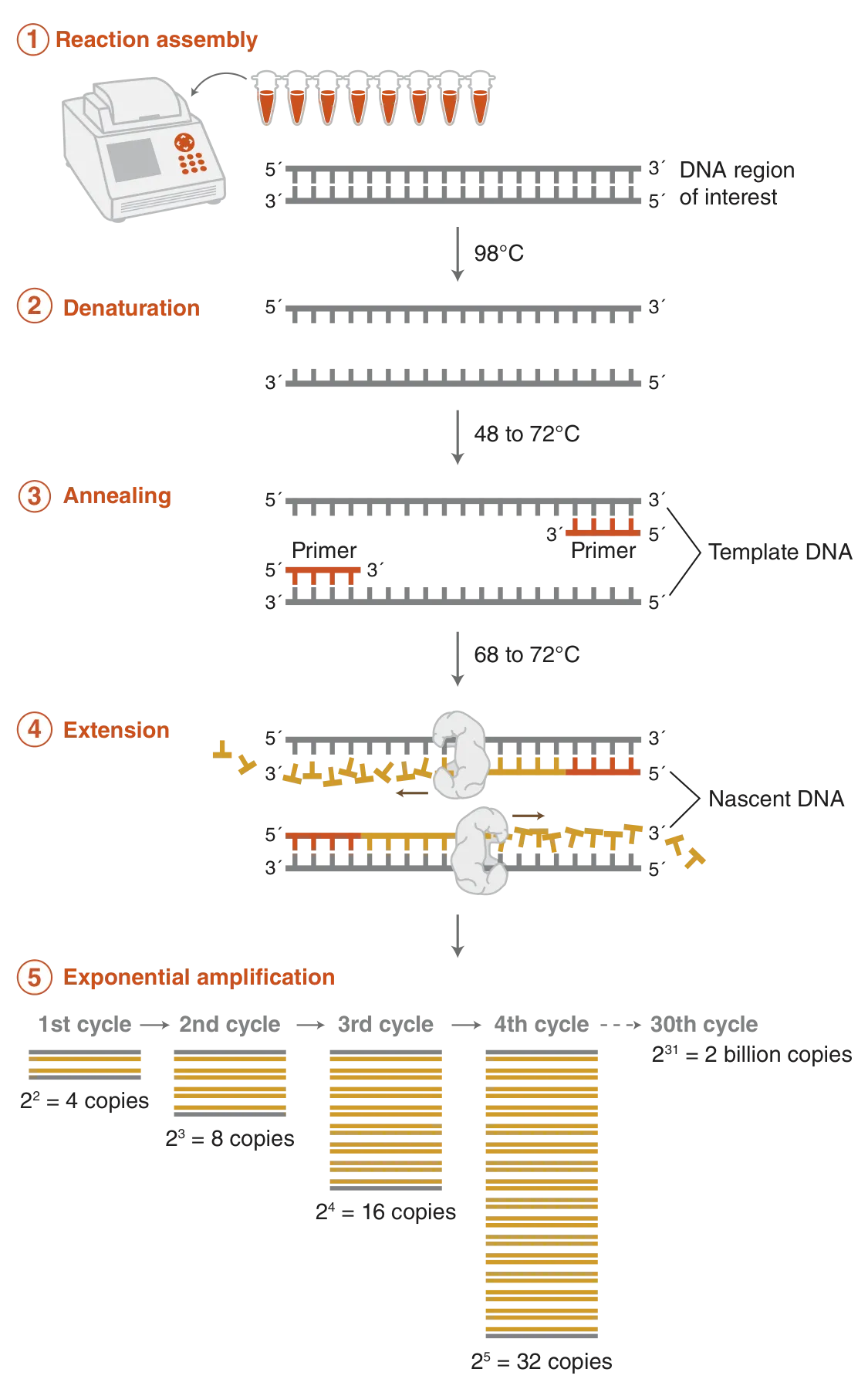
One of the early challenges in molecular cloning was obtaining enough insert DNA. Early cloning relied on genomic DNA with naturally occurring restriction enzyme recognition sites flanking sequences of interest and required vectors with compatible cloning sites. In 1983, Kary Mullis and colleagues devised a technique that addressed this limitation. They amplified a specific segment of target DNA by using opposing primers – short synthetic DNAs of defined sequence complementary to regions flanking the sequence of interest (52,53). Through cycles of denaturation, annealing and polymerization, they demonstrated exponential amplification of a defined DNA sequence. This method, known as the polymerase chain reaction (PCR), summarized in Figure 2, made it possible to amplify and clone genes from small amounts of DNA without concern for the presence or availability of restriction sites.
Cloning of PCR products. Several methods were initially developed for cloning PCR products. The most common approach involves introducing restriction sites into the amplified fragment by including those restriction site sequences at the 5′ ends of the PCR primers (52). This strategy allows for directional cloning of the insert into the vector after restriction digestion to generate compatible overhangs. While directly ligating PCR products that have been phosphorylated using T4 polynucleotide kinase into vectors cut with a restriction enzyme that leaves blunt ends is possible, it was generally found to be inefficient because polymerases typically do not leave “clean” blunt ends. To improve this strategy, T/A cloning methods were developed that take advantage of Taq DNA polymerase’s property of adding a single unpaired 3´ deoxyadenosine (dA) nucleotide to the end of each PCR product (54,55). The PCR product can be easily ligated into a linearized vector prepared with a single-base T overhang at the termini, generated either by cutting with the restriction enzyme XcmI or by adding a single T to a blunt end using the enzyme terminal transferase (TdT).
Overlap Extension PCR. Shortly after the introduction of PCR, overlap extension PCR was developed as a method to assemble PCR products into one contiguous DNA sequence without the use of ligase or restriction enzymes (56). In this method, the DNA insert is amplified by PCR using primers that generate a product containing regions overlapping with the vector. The vector and insert are then mixed, denatured and annealed, allowing hybridization of the insert to the vector. A second round of PCR generates recombinant DNA molecules containing the insert within the vector. Overlap extension PCR enabled researchers to piece together large genes that could not easily be amplified by traditional PCR methods. It can also be used to introduce mutations into gene sequences within the primer overlap regions.
Site-directed mutagenesis via PCR. While constructing sequences from scratch allows researchers to define large stretches of DNA, it is often useful to modify specific sequences to introduce insertions, deletions, or substitutions (Figure 3). QuikChange™, developed in 1995 as an early solution for mutating circular plasmids (57), employs overlapping primers designed to anneal across the target sequence. PCR is used to extend the primers around the circular template, resulting in a modified complementary strand with nicks. Because the primer pair does not generate additional priming sites, the PCR proceeds in a linear fashion rather than the typical exponential amplification. Before transformation, the reaction is treated with the methylation-dependent restriction enzyme DpnI to remove the methylated parental template. After transformation, the nicks are sealed in vivo, generating the final modified plasmid. As the primers must anneal on both sides of the target sequence, this method tolerates only minimal changes and is incapable of generating large insertions or deletions.
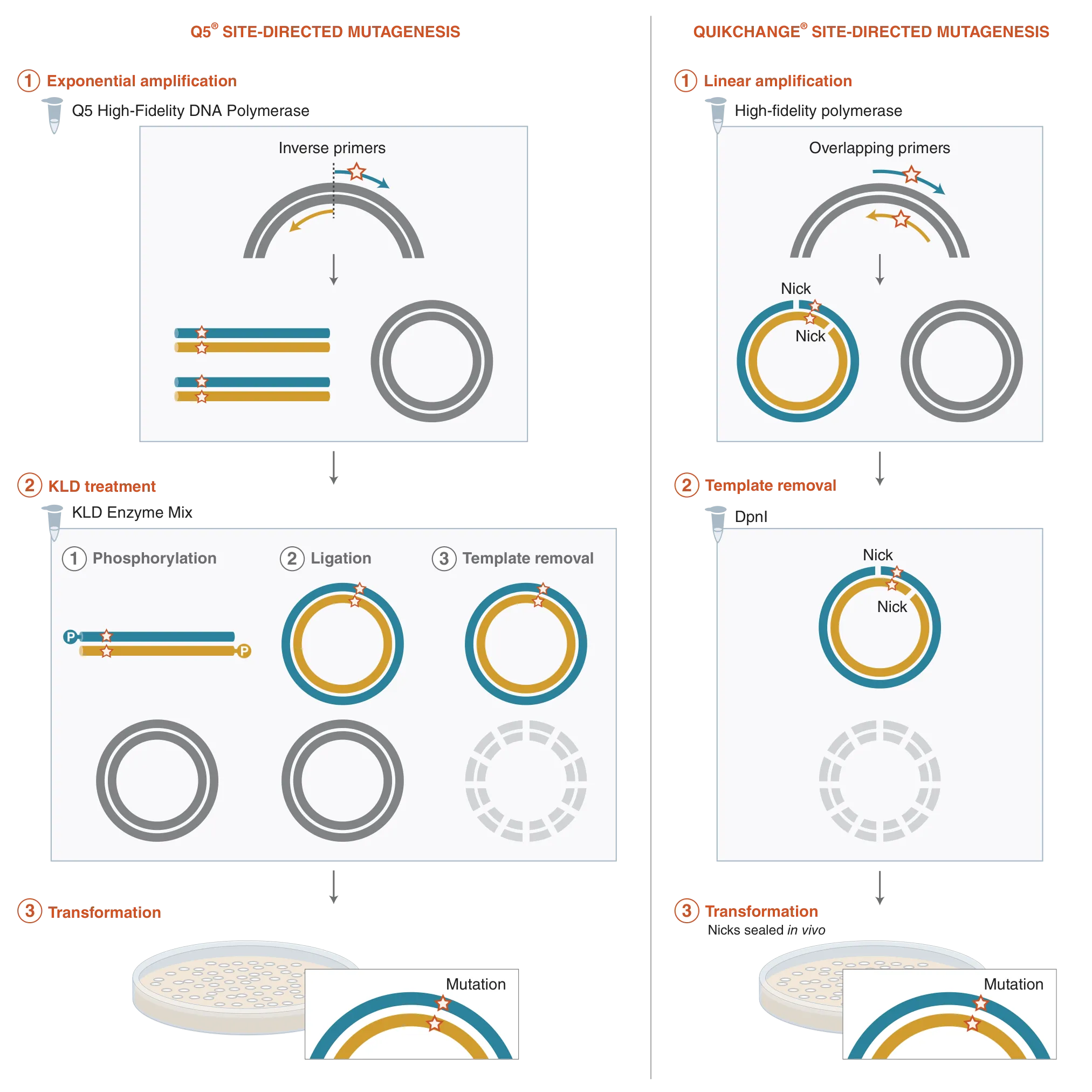
Mutagenesis by inverse PCR, first described in 1989 by Hemsley and colleagues (58), uses two phosphorylated primers designed to anneal in a tail-to-tail fashion, resulting in amplification of the entire plasmid as a linear construct. Primers can be designed to include base changes, insertions or deletions, and their positioning results in exponential amplification (in contrast to the linear amplification of QuikChange). Following amplification, PCR products are DpnI-treated to remove the parental template and then undergo circularization via blunt-end ligation. Due to the flexibility in primer design, larger insertions and deletions are more readily accommodated, and multiple mutations can be introduced simultaneously. The later introduction of the KLD Enzyme Mix by New England Biolabs, which combines Kinase, Ligase and DpnI, allows all post-PCR reactions to be accomplished in a single step. The reaction is efficient, allowing direct transformation after only a five-minute incubation at room temperature. The Q5® site-directed mutagenesis method combines inverse PCR with a high-fidelity polymerase and the KLD mix to enable rapid and efficient introduction of a variety of changes into a plasmid via PCR (Figure 3).
Since these technologies only allow for mutations adjacent to the primer binding sites, mutations at multiple positions often require sequential rounds of QuikChange or inverse PCR. Although modifications have been made to QuikChange to accommodate multiple mutations, the success rate remains relatively low (59). Methods such as Kunkel mutagenesis, Gibson Assembly, and Golden Gate Assembly can be used to mutate multiple sites simultaneously. While primer design is more complex than for QuikChange and inverse PCR, they can permit more dramatic changes to the sequence with much less hands-on manipulation time (60-62).
Improvements to PCR enzymes and methods. Early PCR protocols utilized a DNA polymerase from Thermus aquaticus (Taq polymerase) due to its thermostability and activity across a range of temperatures. However, these methods were limited by the length of the amplifiable product (up to ~5kB), the accuracy of replication (1 error in ~6500 bp), and challenges in amplifying DNA with high or low GC content, highly structured regions, or other difficult sequences (63).
Over the decades, many improved enzymes have been developed. These include LongAmp® polymerases, which enable amplification of 10-20 kb amplicons, high-fidelity polymerases such as Q5®, which have error rates less than 1 in 1,000,000, and improved buffer systems that permit greater tolerance of GC content variation in the target. With some target-dependent protocol optimization, it is now possible to generate high-quality PCR DNA for most targets required in a typical lab. While most high-fidelity PCR polymerases generate blunt-end products, an additional adenine can be added in an A-tailing step after amplification by incubating purified PCR products with Taq or Klenow fragment (exo-) polymerases, making TA cloning methods compatible with modern PCR-generated inserts (64).
Cloning with Synthetic DNA
In the early days of cloning, DNA was obtained almost exclusively from genomic DNA or other natural DNA sources. However, de novo DNA synthesis technologies now allow for the creation of any desired DNA sequence. This includes natural sequences that are otherwise inaccessible, and completely artificial sequences not found in nature. This capability unlocks new possibilities, such as codon optimization to improve expression in heterologous hosts, and experimental testing of in silico-designed gene circuits or proteins. Combined with steadily decreasing costs, and lowering constraints on sequence length and complexity, synthetic DNA has become the go-to DNA source for many researchers.
Phosphoramidite Synthesis. Short single-stranded DNAs, also known as DNA oligonucleotides (DNA oligos), are the building blocks of synthetic DNA. They are assembled sequentially from nucleotides through phosphoramidite synthesis, a method first pioneered by Khorana and colleagues in the 1950s and later refined by his student Caruthers in the 1980s using modern chemistry and solid-phase immobilization approaches (65-67). The availability of DNA oligos was critical for the development and widespread adoption of PCR. Today, advancements in oligo synthesis, including reaction miniaturization, have made DNA oligos significantly cheaper. Microarray technologies now enable the parallel synthesis of hundreds or thousands of DNA oligos (68-70). Nevertheless, due to limitations in stepwise assembly yield, directly synthesized oligonucleotides are limited to several hundred nucleotides in length. Future technological improvements, including non-templated enzymatic approaches using terminal transferases, promise to extend this length limitation through higher accuracy in each nucleotide addition (71-73).
Assembling long synthetic DNAs. To overcome the length limit of oligo synthesis, multiple partially overlapping oligos are stitched together to assemble larger synthetic DNA fragments. This was first accomplished using Polymerase Cycling Assembly (PCA) in 1995 by Stemmer and colleagues (74). In PCA, a DNA polymerase fills gaps between annealed oligos through multiple annealing and extension. The full-length product is then amplified by PCR using primers annealing to both ends of the complete sequence. Alternatively, Ligase Chain Reaction (LCR), developed shortly after PCA in 1998 by Au and colleagues (75), utilizes 5′-phosphorylated oligos that can be linked by a DNA ligase to generate double-stranded DNA. In most workflows, a combination of PCA, LCR, and PCR, along with error-correcting step(s), is used to generate the final sequence. The routine assembly of synthetic fragments of several kilobases is now possible.
Several vendors have scaled and commercialized various synthesis workflows, allowing users to order synthetic DNA sequences of several kilobases in linear or cloned forms. While prices for commercial synthetic DNA are decreasing, they remain significantly more expensive (more than tenfold for a 5 kb piece of DNA) than the cost of primers and reagents to generate inserts via PCR from an existing template. Additionally, these methods have variable success rates for high-complexity targets with extremes of GC content, repeats, and highly structured DNA. However, new workflows are constantly in development that should continue to drive down the cost of synthetic DNA and increase the range of targets that can be produced (73).
Cloning Beyond Classic Restriction Enzyme Methods
To further improve the efficiency and flexibility of molecular cloning, several alternative approaches have been developed. Many of these methods eschew restriction enzymes entirely; some omit ligation or allow the assembly steps to be carried out in vivo by the repair machinery of the cell. Most newer approaches that have gained significant popularity permit the assembly of multiple fragments in one step – up to a dozen at once for high fidelity homology-directed methods like NEBuilder® HiFi DNA Assembly, and even more in the case of Golden Gate and Yeast Assembly. A discussion of some of the most popular methods follows.
TOPO Cloning. Topoisomerase-based cloning uses the unique property of Topoisomerase I, which can both cleave and ligate DNA strands, obviating the need for separate restriction enzymes and ligase. This dual functionality simplifies the cloning process and reduces assembly time. The method typically involves using a commercially available topoisomerase-cloning kit, where the provided vector is pre-linearized at the topoisomerase I recognition site: 5′...[C/T]CCTT…3′. The reaction occurs rapidly at room temperature, making it an efficient method for DNA cloning. Despite this advantage, TOPO cloning is less commonly used than other assembly techniques due to directionality limitations and decreased efficiency as the size of fragments increases (76,77).
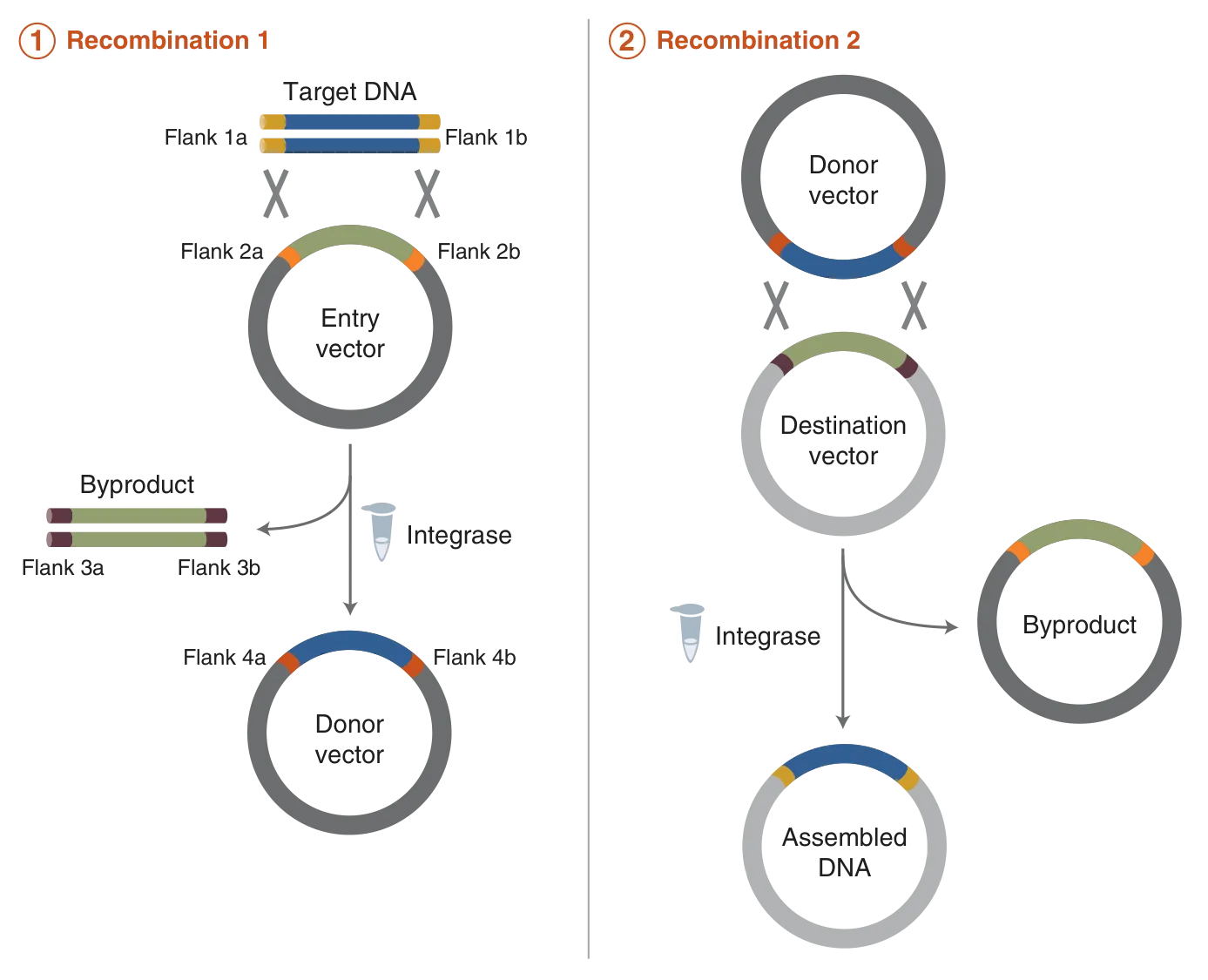
Recombinational Cloning. Multiple recombinase-dependent cloning methodologies (Figure 4) have come into use since the early 2000s (78). Gateway cloning, one of the most widely used methods in this class, leverages site-specific recombination to “flip” sequences in and out of predesignated cassettes within predesigned gateway vectors (78-80). These vectors contain specific att site-flanked cassettes that typically have a ccdB gene and a chloramphenicol-resistance gene for selection/counterselection and propagation. Compatible att sites are added to the ends of DNA inserts through PCR and, with the addition of a recombinase mixture, the insert is exchanged with the cassette in the “donor” vector through recombination with the corresponding att sites creating an “entry clone”. The insert held in the entry clone is then transferred into a “destination” vector using the same recombination sites. The ability to transfer the insert from an entry clone into a library of destination vectors facilitates a multitude of downstream applications such as in vitro transcription, transfections, and other techniques. Gateway cloning can assemble multiple fragments by using multiple recombinases, but these assemblies leave “scars” in the form of recombination sites which may impact the intended sequence (78).
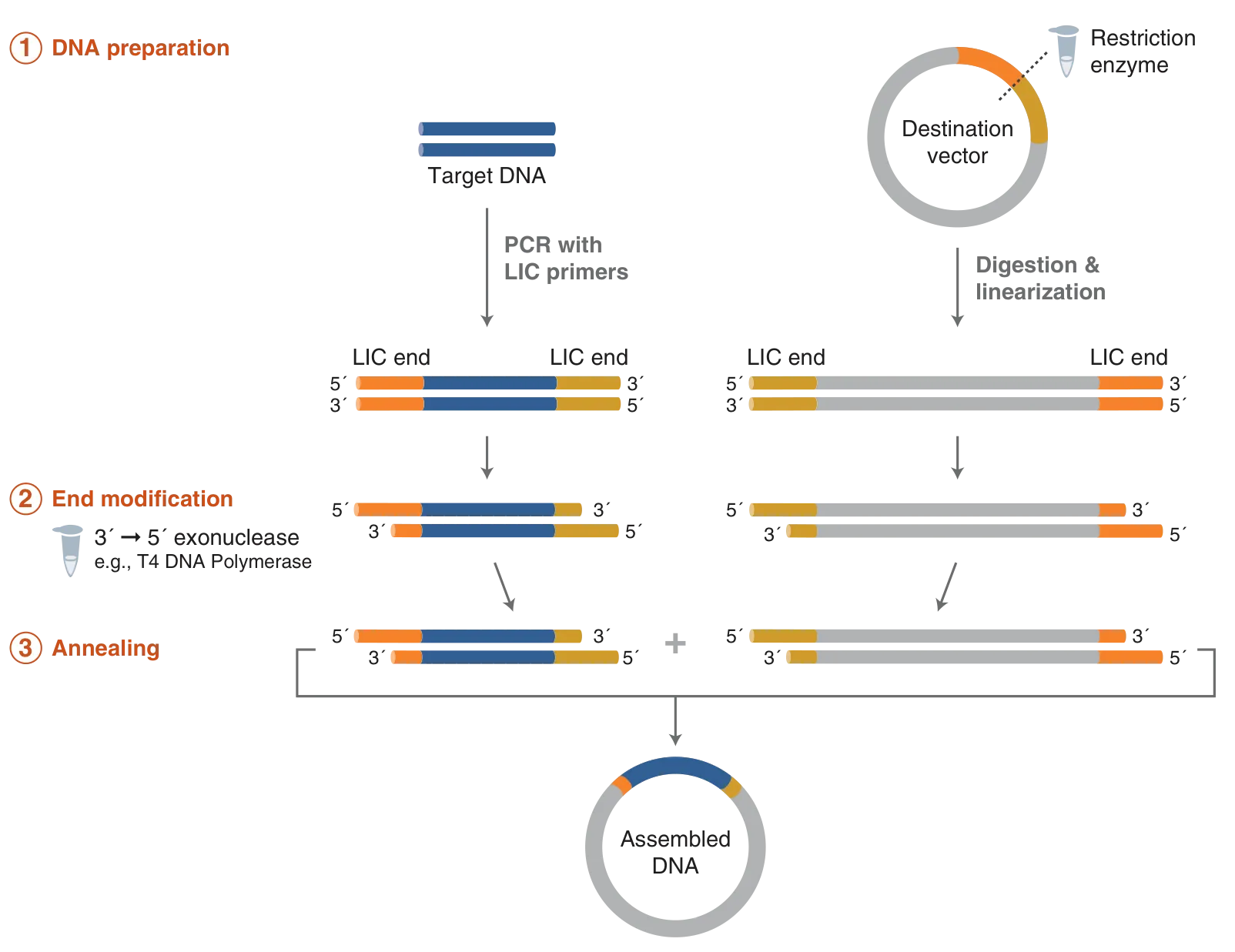
LIC/SLIC/SLiCE. Ligation-independent cloning (LIC) allows for the joining of DNA molecules without the need for a DNA ligase. PCR is used to append vector-homologous regions to the ends of the insert. LIC then utilizes the 3′ → 5′ exonuclease activity of T4 DNA Polymerase to generate single-stranded DNA overhangs from these homologous regions on both the linearized vector DNA and the insert (81). When mixed, the vector and insert anneal through the complementary overhangs. After transformation, the fragments are ligated in vivo by host DNA repair pathways.
In LIC (Figure 5), DNA inserts containing defined terminal sequences are digested to produce overhangs of defined length (~12 bp) by omitting all but one dNTP from the reaction, causing the polymerase to stall at the first occurrence of that base in the overlap region. A vector is prepared in the same manner to contain a complementary overhang. When the insert and vector anneal, a construct with four “nicks” is generated. In Sequence and Ligation Independent Cloning (SLIC), no defined overhang sequence is required, and the digestion reaction does not generate overhangs of defined length, leaving gaps in the annealed vector-insert structure that are repaired by the host polymerase in vivo (82). SLIC has been demonstrated to allow assembly of five or more fragments in a single transformation. SLiCE (Seamless Ligation Cloning Extract) takes the LIC/SLIC protocol one step further by utilizing bacterial cell extracts to produce 5′ single-stranded DNA overhangs through 3′ → 5′ exonuclease activity present in the extract, which was later shown to be catalyzed by exonuclease III (83,84).
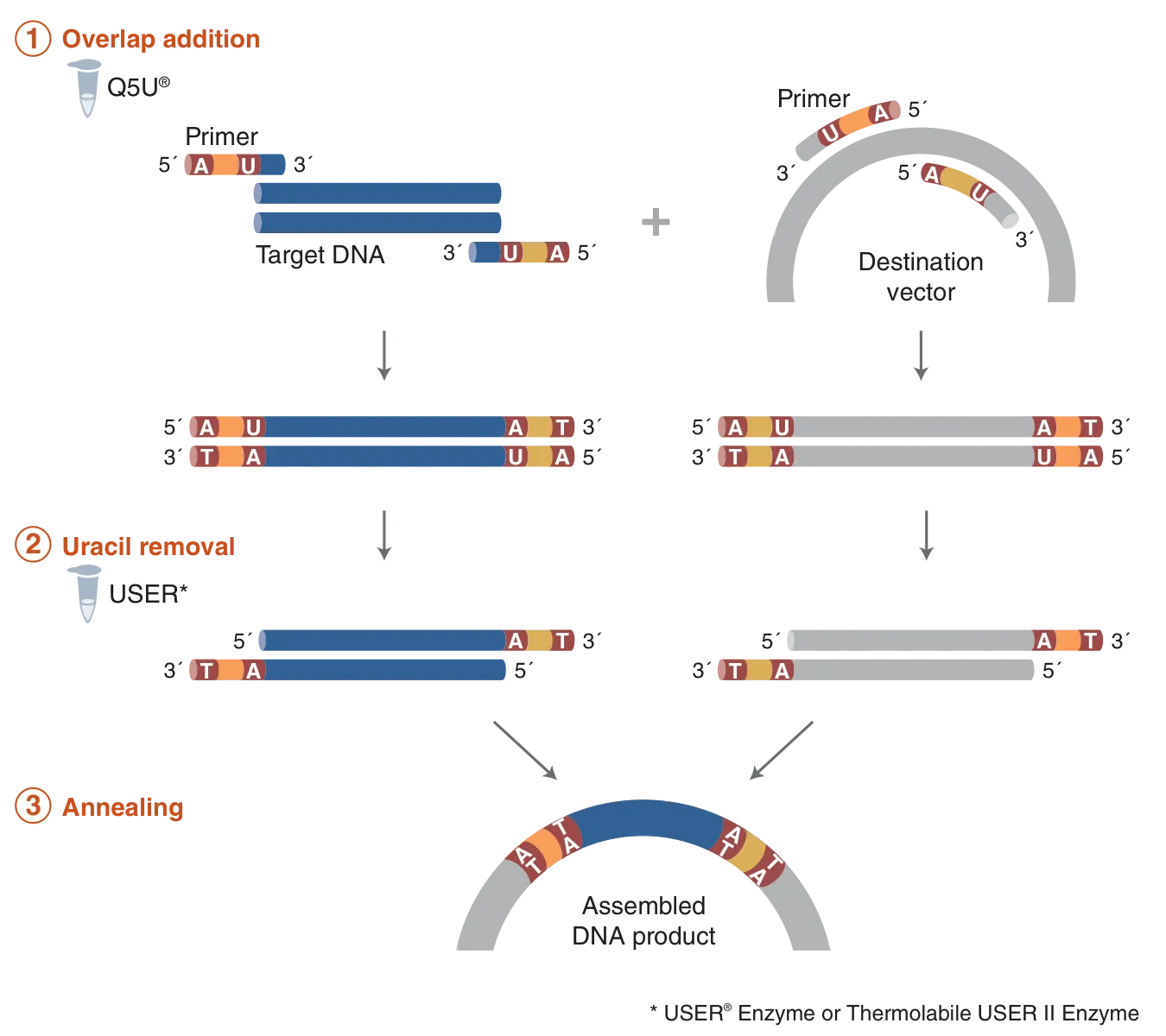
USER cloning. USER (Uracil-Specific Excision Reagent) cloning (Figure 6) was developed at NEB in the mid-2000s (85). This method relies on PCR primers that contain deoxyuridine bases at defined positions. The PCR product is treated with Uracil DNA Glycosylase (UDG), which excises the uracil bases to generate abasic sites, and Endonuclease VIII, which cleaves the abasic nucleosides leaving a single-stranded 3´ overhang that can be annealed to a similarly treated vector. USER treatment can generate ssDNA overhangs of arbitrary length from almost any sequence, with the exception that the last base of the overhang before the dsDNA region must be an Adenine (A). Fragments are annealed and transformed, with the resultant nicks ligated in vivo. Thus, if overhang sequences are chosen carefully, this method permits the assembly of multiple fragments at once, allowing multiple PCR products to be inserted into a vector in a single step.
Isothermal Homology-directed Assembly (Gibson/NEBuilder). While pursuing the goal of producing a fully synthetic Mycoplasma genitalium genome (>500 kB in size), researchers at the J. Craig Venter Institute developed an exonuclease-based method they termed Check-back Assembly (CBA) (86). Similar to LIC and SLIC, this approach used DNA fragments with long homologous ends, treated with an exonuclease and a polymerase to generate long complementary ssDNA overhangs. Rather than relying on in vivo DNA repair to join these fragments after transformation, the enzymes were heat inactivated, slowly cooled to anneal the complementary regions, then joined in vitro using a combination of Taq DNA Polymerase to fill gaps and Taq DNA ligase to seal the resultant nicks. Thus, this approach generates covalently sealed DNA that requires no in vivo repair.
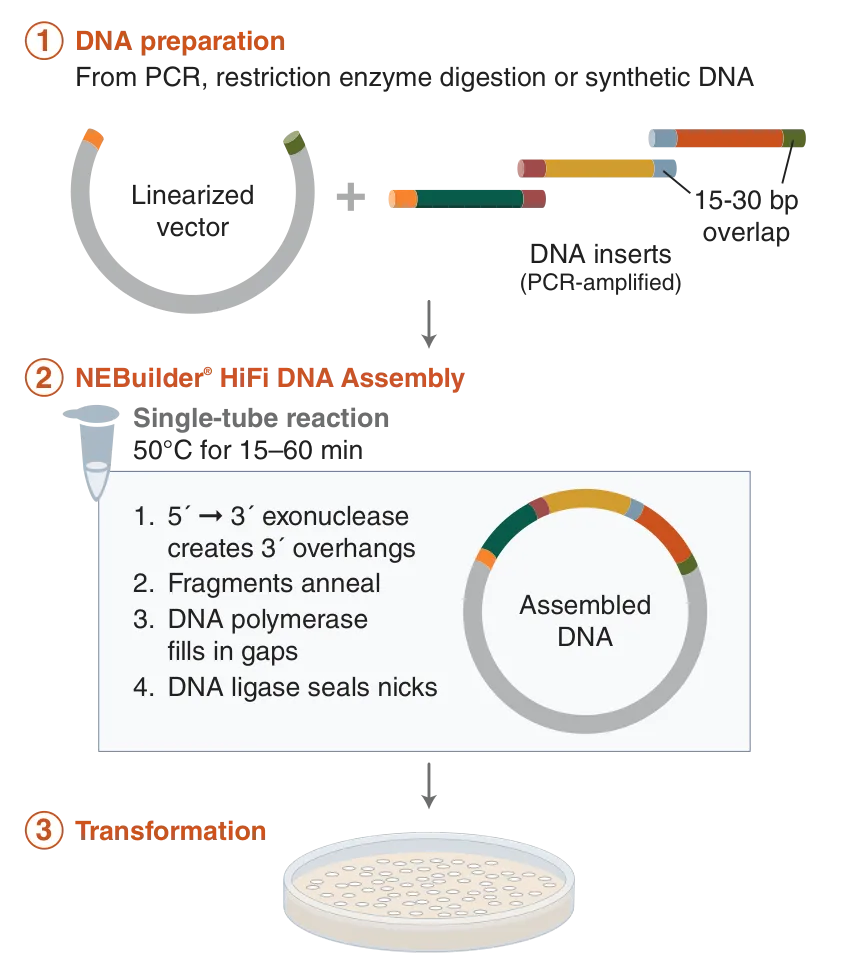
CBA was refined into a one-step, isothermal assembly protocol, combining a 5′-3′ exonuclease, a DNA polymerase, and a ligase in one reaction. In this version, T5 Exonuclease is used to generate complementary single-stranded regions that can anneal with complements in adjoining fragments. A DNA polymerase lacking strand displacement activity then extends the DNA to fill in gaps, halting upon encountering a 5′ end. The resultant nick is then sealed by Taq DNA Ligase. This method, commonly known as Gibson Assembly, would go on to see application far beyond complex genome assembly and become one of the dominant cloning protocols in use today (87).
Homology-directed cloning offers significant advantages over traditional methods. It allows any insert to be cloned into any vector using an enzyme master mix in a single isothermal incubation step, taking as little as fifteen minutes. This method can also join multiple linear DNA fragments in a user-defined order, provided 15-20 bp of homology are present at the joining sites. Vectors are linearized using restriction enzymes or PCR amplification. Homology can be introduced via PCR using primers that encode homologous sequences. Furthermore, primers can be designed to introduce mutations at the joining sites, enabling multi-site mutagenesis in a single reaction. Typically, five fragments can be routinely assembled using homology-directed isothermal assembly methods. Assembly design tools like Geneious or the online NEBuilder Assembly Tool support error-free design of homology regions and PCR primers for multi-fragment assembly.
While a powerful technique, homology-directed assembly can be limited by incorporation errors within the overlap regions, derived from the repeated digestion/extension reactions in the overlap regions. This issue can be mitigated by using homology-directed assembly methods that employ high-fidelity polymerases, such as NEBuilder HiFi DNA Assembly (Figure 7). NEBuilder provides enhanced proof-reading activity and tolerance of both 3′ and 5′ terminal mismatches between homologous fragments. Additionally, the special formulation allows for the assembly of homologous parts using single-stranded bridges and requires shorter overlapping homology regions than the original method. Up to twelve fragments are possible in one step using NEBuilder.
Golden Gate Assembly. Golden Gate Assembly (GGA), also known as Golden Gate Cloning, is another cloning method that permits multiple fragments to be joined in a single reaction, efficiently and in a defined order (88-90). The name was inspired by inserts “bridging” the two ends of a vector, along with a reference to the recombination-based Gateway cloning for its use of standardized vectors. While it is often considered an alternative to long homology-dependent multi-fragment assembly, the method shares more in common with traditional restriction enzyme cloning than with exonuclease-dependent methods like Gibson, NEBuilder, and LIC.
GGA relies on the unique properties of Type IIS restriction enzymes, which had already been explored in precursor methodologies (91,92). Traditional cloning methods most often use Type IIP enzymes, which recognize and cut within a palindromic binding site to generate a self-complementary overhang. Ligation of two ends generated by the same Type IIP enzyme regenerates the restriction recognition/cut site. Type IIS enzymes, by contrast, bind a non-palindromic recognition site, and cut distal to the binding site (Figure 8). This generates a short overhang that can be any possible nucleotide sequence, determined by the DNA sequence of the cut site, not the recognition site. This property allows generation of overhangs that are not self-complementary, preventing dimerization and permitting the joining of multiple fragments in a desired order (91,92).
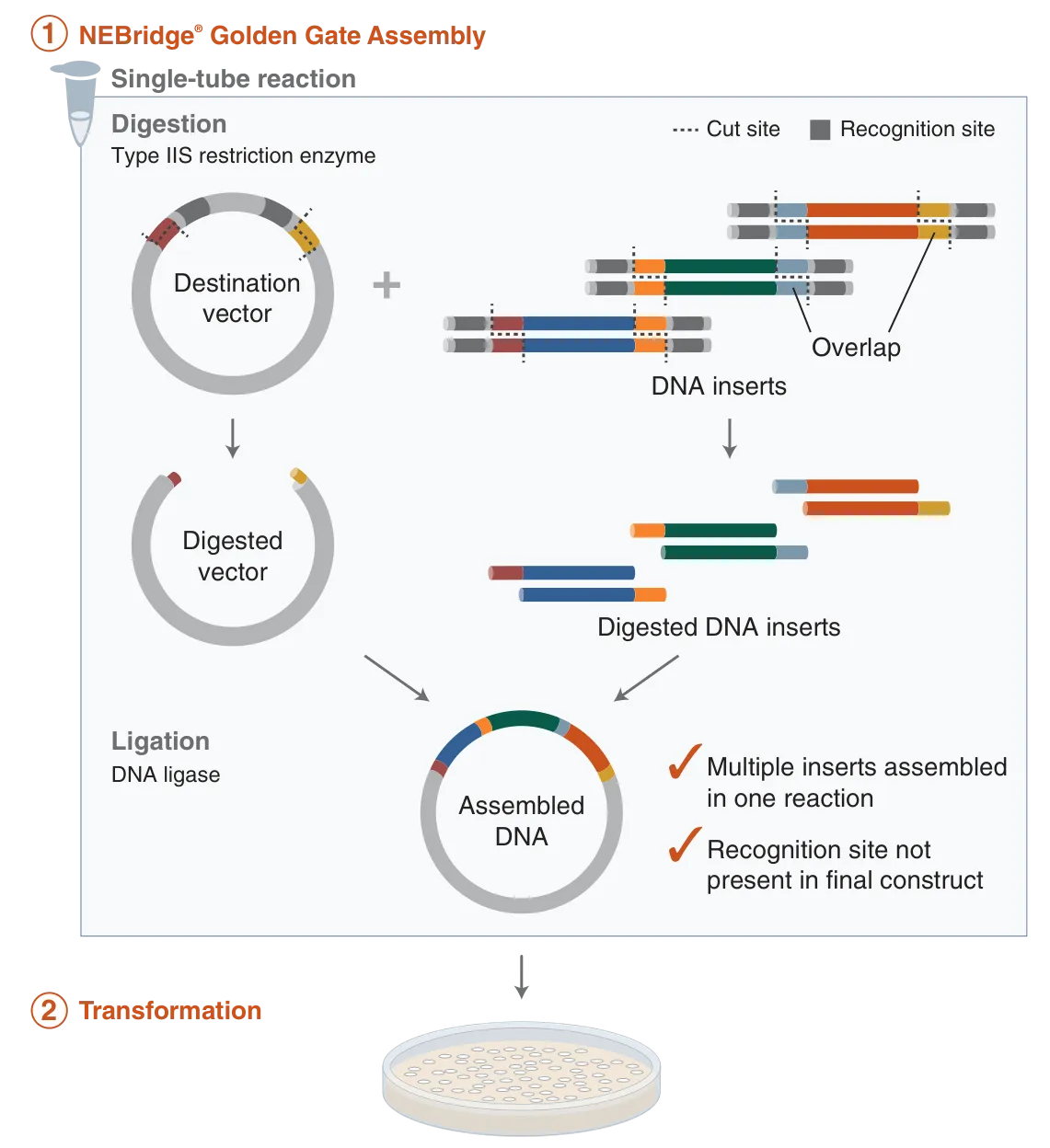
The design principles of modularity and fragment re-use from methods such as NOMAD (93) and BioBricks (94,95) are also incorporated into GGA while simplifying the reaction to eliminate separate digestion and ligation steps. Instead of a classic digestion, purification, and ligation protocol, GGA combines the uncut DNA fragments and destination vector in a one-pot reaction mixture containing both the restriction and ligation enzymes. When the sites are cut, the Type IIS recognition sites are separated from the inserts and lost from the vector. If a fragment or vector re-ligates to the originally cut away piece of DNA, the Type IIS site is regenerated and can be cut again. However, if it ligates to its desired partner, the Type IIS recognition site is eliminated. By cycling between optimal temperatures for cleavage and ligation, high yields of assembled product can be achieved.
A drawback of the method is that GGA requires all naturally occurring instances of the recognition site for the enzyme to be removed from the native sequence, or these will be cut during assembly, greatly reducing the yield of the final assembly. The removal of these sites can be accomplished through a process known as “domestication,” altering the sequence to remove these sites, e.g., by making silent mutations. When using synthetic DNA, these changes can be made in silico. When generating fragments by PCR, internal sites must be removed by first cloning the fragments then doing SDM, or by making the changes in the primers themselves by placing the GGA break points near the sites to be mutated. The latter process can be used to introduce any desired point mutations, permitting GGA to be used as a method of multisite mutagenesis as well as assembly (61).
Golden Gate Assembly has been embraced by the synthetic biology community as it supports the development of “standards,” defined sets of overhangs to join fragments paired with sets of matched vectors. For example, the most widely used standard, MoClo, puts “parts” (DNA sequences flanked by Type IIS sites) in “Level 0” holding vectors. Up to five insert fragments can be combined into a “Level 1” vector, and the assemblies here can be in turn combined with other Level 1 assemblies to build an even larger “Level 2” construct. The use of standard connections at each of these levels to join and order these parts both gives confidence assemblies will work every time, as the overhangs used have been experimentally validated, and permits parts to be freely shared with labs working within the same standard. Many different standards have been developed over the years for use by different sub-fields, with parts and vectors optimized around yeast, plants or other destination organisms (96).
Commonly used restriction enzymes for GGA (BsaI-HFv2, BsmBI-v2, BbsI-HF, PaqCI and their isoschizomers) generate four base overhangs. In theory there are 120 possible four-base Watson-Crick pairs (excluding palindromes) that could be used to order fragments in a Golden Gate Assembly; in practice, most existing standards join only five to eight fragments per assembly reaction. Recent work at NEB has comprehensively explored the ligation of all possible three and four base overhangs, identifying all pairs prone to mismatch ligation (97,98). In GGA, any mismatched overhangs that ligate will result in erroneous assembly, leading to reduce yield and products containing large insertions or deletions. Using the above studies, Data-optimized Assembly Design (DAD) rules that allow for High Complexity Golden Gate Assemblies (HC-GGA) of dozens of fragments to be joined in a single reaction step were developed. These design approaches permit the direct assembly of up to 50 kB from typical PCR fragments (1-5 kB) in a single step, and have been combined with PCR amplification of synthetic oligo pools to permit assembly of many genes in a cost-effective manner utilizing equipment available to most academic labs (99). Ligase Fidelity Tools have been designed to enable the application of these design rules to any sequence (100,101).
Yeast Assembly. Yeast DNA assembly is an in vivo method that leverages the homologous recombination machinery of yeast to construct large DNA molecules (86,102-104). Unlike most other assembly techniques, yeast assembly does not require any enzymatic treatments and relies solely on sequence overlaps as short as 24 bp at the ends of linear DNA fragments. Despite drawbacks, such as low yields of assembled DNA and the extended time (days or weeks) required to determine assembly success rates, yeast assembly offers significant advantages. It enables the assembly of dozens of large DNA parts into high molecular weight constructs and hundreds of kilobases (kb), which is a difficult challenge for most assembly methods. Further, the yeast host cells can maintain and propagate the final product without concerns about genes or ORFs that could be toxic to bacterial cells. Although vectors can be subject to genetic instability and host toxicity, as with any in vivo propagated DNA, this method enables assembly capabilities beyond current in vitro methods.
Multiple studies have demonstrated the effectiveness of yeast assembly. In 2008, Shao et al. introduced a method named “DNA assembler”, which utilized this technique to construct a functional 21 kb metabolic pathway in Saccharomyces cerevisiae (105). In the same year, Gibson et al. reported the construction of a fully synthetic 582 kb Mycoplasma genitalium genome within yeast cells using 25 overlapping fragments (102). Today, through rounds of cell-to-cell transfer of assembled DNA via yeast mating and sporulation, megabase-sized constructs have been assembled, including entire bacterial and eukaryotic chromosomes (106).
Automation in Cloning and DNA Assembly
Challenges such as human error, contamination risk, and the labor-intensity inherent in producing large numbers of recombinant plasmids can be addressed through modern automated systems (107,108). Liquid handlers have transformed high throughput testing and screening. These instruments enable researchers to run hundreds of reactions in parallel with high precision in minuscule volumes and within short time frames. An example of how automation has accelerated and scaled up biological research is automated microchip-based oligonucleotide synthesis, where short oligos are synthesized in parallel on microarrays, and then PCR amplified and PCA/LCR assembled in situ (70,73).
In recent years, biofoundries have emerged to help make high-throughput DNA assembly and cloning accessible to smaller labs in research institutes and universities (107). Biofoundries are large core facilities found in academic (e.g., University of Illinois Urbana-Champaign’s BioFab), government (e.g., the Joint Genome Institute at Lawrence Berkeley National Laboratory), and industry settings (e.g., Gingko Bioworks). They provide automated DNA assembly services by combining computer-aided design (CAD) software with high-throughput liquid handlers. Upon receiving online orders, their integrated system seamlessly handles oligo synthesis, reaction setup, DNA assembly, purification, quality control, transformation and post-transformation analysis in a fully automated, end-to-end workflow.
Many academic and government foundries can be accessed by outside users and collaborators via funded grants or are available to users within the larger organizations housing the foundries. For example, in a study by Enghiad et al., the authors showcase the use of iBioFAB to fully automate the planning and execution process ─ from primer and guide design and ordering to high-throughput assembly and verification ─ within a single integrated platform (109). Similarly, the DNA-BOT platform described in Storch et al. combines an open-source software package with an Opentrons liquid handler to offer a low-cost but accurate DNA assembly workflow (110). Foundries such as these provide recombinant and synthetic DNA constructs at scales previously unattainable except by the largest research groups.
Conclusion
In the last 50 years, molecular cloning has progressed from arduously isolating and assembling two pieces of DNA, followed by intensive screening of potential clones, to seamlessly assembling 10 or more DNA fragments with remarkable efficiency in just a few hours, or designing DNA molecules in silico and synthesizing them in vitro. Together, all these technologies provide molecular and synthetic biologists with an astonishingly powerful toolbox for exploring, manipulating and harnessing DNA, further broadening the horizons of science. Among the possibilities are the development of safer recombinant proteins for disease treatment, enhancements in gene therapy, vaccine production, and the rewriting/programming of entire organisms and genomes. Ultimately, the potential is constrained only by our imaginations.
Acknowledgement: Thank you to Rebecca Tirabasi of Bitesize Bio for authoring original article on this topic, which was previously published on neb.com.

References
- Shin, J.H. (2013). In Tang, Y.-W. & Stratton, C. W. (Eds.), Advanced techniques in diagnostic microbiology (pp. 209–225). Boston, MA: Springer US.
- New England Biolabs. (2016). Protocol for use with NEBNext Ultra II DNA Library Prep with Sample Purification Beads (E7103) [Technical protocol]. New England Biolabs.
- Hawkins, T., Patent US5705628A, 1998.
- Luria, S.E. and Human, M.L. (1952) J. Bacteriol., 64, 557-569. DOI: https://doi.org/10.1128/jb.64.4.557-569.1952
- Linn, S. and Arber, W. (1968) PNAS, 59, 1300-1306. DOI: https://doi.org/10.1073/pnas.59.4.1300
- Danna, K. and Nathans, D. (1971) PNAS, 68, 2913-2917. DOI: https://doi.org/10.1073/pnas.68.12.2913
- Smith, H.O. and Welcox, K.W. (1970) J. Mol. Biol., 51, 379-391. DOI: https://doi.org/10.1016/0022-2836(70)90149-X
- Kamps-Hughes, N. et. al., (2013) Nucl. Acids Res., 41, e119-e119. DOI: https://doi.org/10.1093/nar/gkt257
- Bode, V.C. and Kaiser, A.D. (1965) J. Mol. Biol., 14, 399-417. DOI: https://doi.org/10.1016/S0022-2836(65)80190-5
- Kellenberger, G., Zichichi, M.L. and Weigle, J.J. (1961) PNAS, 47, 869-878. DOI: https://doi.org/10.1073/pnas.47.6.869
- Meselson, M. and Weigle, J.J. (1961) PNAS, 47, 857-868. PMC221352. DOi: https://doi.org/10.1073/pnas.47.6.857
- Cozzarelli, N.R. et.al., (1967) Biochem. Biophys. Res. Commun., 28, 578-586. DOI: https://doi.org/10.1016/0006-291X(67)90353-1
- Gefter, M.L., Becker, A. and Hurwitz, J. (1967) PNAS, 58, 240-247. DOI: https://doi.org/10.1073/pnas.58.1.240
- Gellert, M. (1967) PNAS, 57, 148-155. DOI: https://doi.org/10.1073/pnas.57.1.148
- Olivera, B.M. and Lehman, I.R. (1967) PNAS, 57, 1426-1433. DOI: https://doi.org/10.1073/pnas.57.5.1426
- Weiss, B. and Richardson, C.C. (1967) PNAS, 57, 1021-1028. DOI: https://doi.org/10.1073/pnas.57.4.1021
- Jackson, D.A., Symons, R.H. and Berg, P. (1972) PNAS, 69, 2904-2909. DOI: https://doi.org/10.1073/pnas.69.10.2904
- Murray, N.E., Bruce, S.A. and Murray, K. (1979) J. Mol. Biol., 132, 493-505. DOI: https://doi.org/10.1016/0022-2836(79)90271-7
- Pheiffer, B.H. and Zimmerman, S.B. (1983) Nucl. Acids Res., 11, 7853-7871. DOI: https://doi.org/10.1093/nar/11.22.7853
- Wilson, G.G. and Murray, N.E. (1979) J. Mol. Biol., 132, 471-491. DOI: https://doi.org/10.1016/0022-2836(79)90270-5
- Lohman, G.J.S., Tabor, S. and Nichols, N.M. (2011) Curr. Prot. Mol. Biol., 94, 3.14.1-3.14.7. DOI: https://doi.org/10.1002/0471142727.mb0314s94
- Avery, O.T., Macleod, C.M. and McCarty, M. (1944) J. Exper. Med., 79, 137-158. DOI: https://doi.org/10.1084/jem.79.2.137
- Griffith, F. (1928) J. Hygiene, 27, 113-159. DOI: https://doi.org/10.1017/s0022172400031879
- Mandel, M. and Higa, A. (1970) J. Mol. Biol., 53, 159-162. DOI: https://doi.org/10.1016/0022-2836(70)90051-3
- Calvin, N.M. and Hanawalt, P.C. (1988) J. Bacteriol., 170, 2796-2801. DOI: https://doi.org/10.1128/jb.170.6.2796-2801.1988
- Hayes F. In: Casali N, Preston A, editors. E. coli plasmid vectors: Methods and applications. Totowa (NJ): Humana Press; 2003. p. 1–17. https://link.springer.com/book/10.1385/1592594093
- Preston, A. (2003). In N. Casali & A. Preston (Eds.), E. coli plasmid vectors: Methods and applications (pp. 19–26). Totowa, NJ: Humana Press. https://link.springer.com/book/10.1385/1592594093
- Yanisch-Perron, C., Vieira, J. and Messing, J. (1985) Gene, 33, 103-119. DOI: https://doi.org/10.1016/0378-1119(85)90120-9
- Studier, F.W. and Moffatt, B.A. (1986) J. Mol. Biol., 189, 113-130. DOI: https://doi.org/10.1016/0022-2836(86)90385-2
- NEB. NEB Competent Cell Selection Guide
- Julin, D.A. (2018) In Wells, R. D., Bond, J. S., Klinman, J. and Masters, B. S. S. (eds.), Molecular Life Sciences: An Encyclopedic Reference. pp. 72-73. https://link.springer.com/referencework/10.1007/978-1-4614-1531-2
- Messing, J. et.al., (1977) PNAS, 74, 3642-3646. DOI: https://doi.org/10.1073/pnas.74.9.3642
- Goranson-Siekierke, J., & Erbe, J. L. (2003). [Chapter]. In N. Casali & A. Preston (Eds.), E. coli plasmid vectors: Methods and applications (pp. 175–181). Humana Press. https://link.springer.com/book/10.1385/1592594093
- Sanger, F., Nicklen, S. and Coulson, A.R. (1977) PNAS, 74, 5463-5467. DOI: https://doi.org/10.1073/pnas.74.12.5463
- Cohen, S.N. et.al., (1973) PNAS, 70, 3240-3244. DOI: https://doi.org/10.1073/pnas.70.11.3240
- Bolivar, F. et.al., (1977) Gene, 2, 95-113. DOI: https://pubmed.ncbi.nlm.nih.gov/344137/
- Helinski, Donald, R. (2022) EcoSal Plus, 10, eESP-0028-2021. DOI: https://doi.org/10.1128/ecosalplus.ESP-0028-2021
- Jack, W. E. (2001). In S. Brenner & J. H. Miller (Eds.), Encyclopedia of genetics (pp. 2104–2106). Academic Press.
- Nora, L.C. et.al., (2019) Microb. Biotech., 12, 125-147. DOI: https://doi.org/10.1111/1751-7915.13318
- Morgan, K. Plasmids 101: Origin of Replication. https://blog.addgene.org/plasmid-101-origin-of-replication
- Lin-Chao, S., Chen, W.T. and Wong, T.T. (1992) Mol. Microbiol., 6, 3385-3393. DOI: https://doi.org/10.1111/j.1365-2958.1992.tb02206.x
- Shizuya, H. et.al., (1992) PNAS, 89, 8794-8797. DOI: https://doi.org/10.1073/pnas.89.18.8794
- Kim, U.J., e.al., (1992) Nucl. Acids Res., 20, 1083-1085. DOI: https://doi.org/10.1093/nar/20.5.1083
- Wild, J., Hradecna, Z. and Szybalski, W. (2002) Genome Res., 12, 1434-1444. DOI: https://doi.org/10.1101/gr.130502
- Mössner, E., Boll, M. and Pfleiderer, G. (1980) Hoppe-Seyler's Zeitschrift fur physiologische Chemie, 361, 543-549. 10.1515/bchm2.1980.361.1.543. https://www.degruyterbrill.com/document/doi/10.1515/bchm2.1980.361.1.543/html
- Weissig, H. et.al., (1993) Biochem. Journal, 290 ( Pt 2), 503-508. DOI: https://doi.org/10.1042/bj2900503
- Nilsen, I.W., Øverbø, K. and Olsen, R.L. (2001) Comp. Biochem. Physiol. B Biochem. Mol. Biol., 129, 853-861. DOI: https://doi.org/10.1016/S1096-4959(01)00391-8
- Olsen, R.L., Øverbø, K. and Myrnes, B. (1991) Comp. Biochem. Physiol. B Biochem. Mol. Biol., 99, 755-761. DOI: https://doi.org/10.1016/0305-0491(91)90139-5
- Rina, M. et.al.,(2000) Europ. J. Biochem., 267, 1230-1238. DOI: https://doi.org/10.1046/j.1432-1327.2000.01127.x
- De Prada, P. and Brenchley, J.E. (1997) Appl. and Envir. Microbiol., 63, 2928-2931. DOI: https://doi.org/10.1128/aem.63.7.2928-2931.1997
- Manes, T. et.al., (1998) J. Biol. Chem., 273, 23353-23360. DOI: https://doi.org/10.1074/jbc.273.36.23353
- Mullis, K.B. and Faloona, F.A. (1987), Meth. Enzym., Vol. 155, pp. 335-350. DOI: https://doi.org/10.1016/0076-6879(87)55023-6
- Saiki, R.K. et.al. (1985) Science, 230, 1350-1354. DOI: https://doi.org/10.1126/science.2999980
- Kovalic, D., Kwak, J.H. and Weisblum, B. (1991) Nucl. Acids Res., 19, 4560. DOI: https://doi.org/10.1093/nar/19.16.4560
- Holton, T.A. and Graham, M.W. (1991) Nucl. Acids Res., 19, 1156. DOI: https://doi.org/10.1093/nar/19.5.1156
- Higuchi, R., Krummel, B. and Saiki, R.K. (1988) Nucl. Acids Res., 16, 7351-7367. DOI: https://doi.org/10.1093/nar/16.15.7351
- Braman, J., Papworth, C., & Greener, A. (1996). In M. K. Trower (Ed.), In vitro mutagenesis protocols (pp. 31–44). Humana Press. https://link.springer.com/book/10.1385/0896033325
- Hemsley, A. et.al., (1989) Nucl. Acids Res., 17, 6545-6551. DOI: https://doi.org/10.1093/nar/17.16.6545
- Wang, W. and Malcolm, B.A. (1999) BioTechniques, 26, 680-682. DOI: https://doi.org/10.2144/99264st03
- Kunkel, T.A., Bebenek, K. and McClary, J. (1991), Meth. Enzymol. Vol. 204, pp. 125-139. DOI: https://doi.org/10.1016/0076-6879(91)04008-C
- Püllmann, P. et.al., (2019) Scientific Reports, 9, 10932. DOI: https://doi.org/10.1038/s41598-019-47376-1
- Schildkraut, E. and Hsieh, P. (2013) Genet. Engin. & Biotech. News, 33, 18-19. DOI: https://dx.doi.org/10.1089/gen.33.4.08
- Potapov, V. and Ong, J.L. (2017) PLoS one, 12, e0169774. DOI: https://doi.org/10.1371/journal.pone.0169774
- A-Tailing with Taq Polymerase V.2
- Gilham, P.T. and Khorana, H.G. (1958) J. Am. Chem. Soc., 80, 6212-6222. DOI: https://doi.org/10.1021/ja01556a016
- Matteucci, M.D. and Caruthers, M.H. (1981) J. Am. Chem. Soc., 103, 3185-3191. DOI: https://doi.org/10.1021/ja00401a041
- McBride, L.J. and Caruthers, M.H. (1983) Tetrahedron Letters, 24, 245-248. DOI: https://doi.org/10.1016/S0040-4039(00)81376-3
- Blanchard, A.P., Kaiser, R.J. and Hood, L.E. (1996) Biosensors and Bioelectronics, 11, 687-690. DOI: https://doi.org/10.1016/0956-5663(96)83302-1
- Hughes, T.R. et.al., (2001) Nat. Biotech., 19, 342-347. DOI: https://doi.org/10.1038/86730
- LeProust, E.M. et.al., (2010) Nucl. Acids Res. 38(8):2522-40. DOI: https://doi.org/10.1093/nar/gkq163
- Jensen, M.A. and Davis, R.W. (2018) Biochemistry, 57, 1821-1832. PMC7995564. DOI: https://doi.org/10.1021/acs.biochem.7b00937
- Sarac, I. and Hollenstein, M. (2019) ChemBioChem, 20, 860-871. DOI: https://doi.org/10.1002/cbic.201800658
- Hoose, A. et.al., (2023) Nat. Rev. Chem. 7(3):144-161 DOI: https://doi.org/10.1038/s41570-022-00456-9
- Stemmer, W.P. et.al., (1995) Gene, 164, 49-53. DOI: https://doi.org/10.1016/0378-1119(95)00511-4
- Au, L.-C. et.al., (1998) Biochem. and Biophys. Res. Comm., 248, 200-203. DOI: https://doi.org/10.1006/bbrc.1998.8929
- Shuman, S. (1994) J. Biol. Chem., 269, 32678-32684. DOI: https://doi.org/10.1016/S0021-9258(18)31688-0)
- SnapGene. A Brief Introduction to TOPO Cloning
- Reece-Hoyes, J.S. and Walhout, A.J.M. (2018) CSHL Protocols, 2018, DOI: https://doi.org/10.1101/pdb.top094912
- Walhout, A.J.M. et.al., (2000) In Thorner, J., Emr, S. D. and Abelson, J. N. (eds.), Meth. in Enzymol. 328, pp. 575-IN577. https://www.sciencedirect.com/bookseries/methods-in-enzymology/vol/328
- Hartley, J.L., Temple, G.F. and Brasch, M.A. (2000) Genome Res., 10, 1788-1795. DOI: https://doi.org/10.1101/gr.143000
- Aslanidis, C. and de Jong, P.J. (1990) Nucl. Acids Res., 18, 6069-6074. DOI: https://doi.org/10.1093/nar/18.20.6069
- Li, M.Z. and Elledge, S.J. (2007) Nat. Methods, 4, 251-256. DOI: https://doi.org/10.1038/nmeth1010
- Zhang, Y., Werling, U. and Edelmann, W. (2012) Nucl. Acids Res., 40, e55-e55. DOI: https://doi.org/10.1093/nar/gkr1288
- Liu, A.Y. et.al., (2023) Genes to Cells, 28, 553-562. DOI: https://doi.org/10.1111/gtc.13034
- Bitinaite, J. et.al, (2007) Nucl. Acids Res., 35, 1992-2002. PMC1874603. DOI: https://doi.org/10.1093/nar/gkm041
- Gibson, D.G. et.al., (2008) Science, 319, 1215-1220. DOI: https://doi.org/10.1126/science.1151721
- Gibson, D.G. et.al., (2009) Nat Methods, 6, 343-345. DOI: https://doi.org/10.1038/nmeth.1318
- Engler, C., Kandzia, R. and Marillonnet, S. (2008) PLoS one, 3, e3647. DOI: https://doi.org/10.1371/journal.pone.0003647
- Marillonnet, S. and Grützner, R. (2020) Curr. Prot. Mol. Biol., 130, e115. DOI: https://doi.org/10.1002/cpmb.115
- Sikkema, A.P. et.al., (2023) Current Protocols, 3, e882. DOI: https://doi.org/10.1002/cpz1.882
- Lebedenko, E.N. et.al., (1991) Nucl. Acids Res., 19, 6757-6761. DOI: https://doi.org/10.1093/nar/19.24.6757
- Vermersch, P.S. and Bennett, G.N. (1987) Gene, 54, 229-238. DOI: https://doi.org/10.1016/0378-1119(87)90491-4
- Rebatchouk, D., Daraselia, N. and Narita, J.O. (1996) PNAS, 93, 10891-10896. DOI: https://doi.org/10.1073/pnas.93.20.10891
- Shetty, R.P., Endy, D. and Knight, T.F. (2008) J. Biol. Eng., 2, 5. DOI: https://doi.org/10.1186/1754-1611-2-5
- Knight, T.F. (2003) https://dspace.mit.edu/handle/1721.1/21168
- Bird, J.E., Marles-Wright, J. and Giachino, A. (2022) ACS Syn. Biol., 11, 3551-3563. DOI: https://doi.org/10.1021/acssynbio.2c00355
- Pryor, J.M. et.al., (2022) ACS Syn. Biol., 11, 2036-2042. DOI: https://doi.org/10.1021/acssynbio.1c00525
- Potapov, V. et.al., (2018) ACS Syn. Biol., 7, 2665-2674. DOI: https://doi.org/10.1021/acssynbio.8b00333
- Lund, S. et.al., (2024) ACS Syn. Biol., 13, 745-751. DOI: https://doi.org/10.1021/acssynbio.3c00694
- Biolabs, N.E. NEBridge Golden Gate Assembly Tool
- Biolabs, N.E. NEBridge Ligase Fidelity Tools for Golden Gate Assembly
- Gibson, D.G. et.al., (2008) PNAS, 105, 20404-20409. DOI: https://doi.org/10.1073/pnas.0811011106
- Ip, K., Yadin, R. and George, K.W. (2020) Meth. Mol. Biol., 2205, 79-89. DOI: https://doi.org/10.1007/978-1-0716-0908-8_5
- Chandran, S. and Shapland, E. (2017) Meth. Mol. Biol., 1472, 187-192. DOI: https://doi.org/10.1007/978-1-4939-6343-0_14
- Shao, Z., Zhao, H. and Zhao, H. (2008) Nucl. Acids Res., 37, e16-e16. DOI: https://doi.org/10.1093/nar/gkn991
- He, B. et.al., (2023) Nucl. Acids Res., 51, 8283-8292. DOI: https://doi.org/10.1093/nar/gkad599
- Ma, Y. et.al., (2024) Heliyon, 10(6):e26967. DOI: https://doi.org/10.1016/j.heliyon.2024.e26967
- Stephenson, A. et.al., (2023) ACS Syn. Biol., 12, 3156-3169. DOI: https://doi.org/10.1021/acssynbio.3c00345
- Enghiad, B. et.al., (2022) Nat. Commun., 13, 2697. 10.1038/s41467-022-30355-y.
- Storch, M., Haines, M.C. and Baldwin, G.S. (2020) Syn. Biol., 5. DOI: https://doi.org/10.1038/s41467-022-30355-y