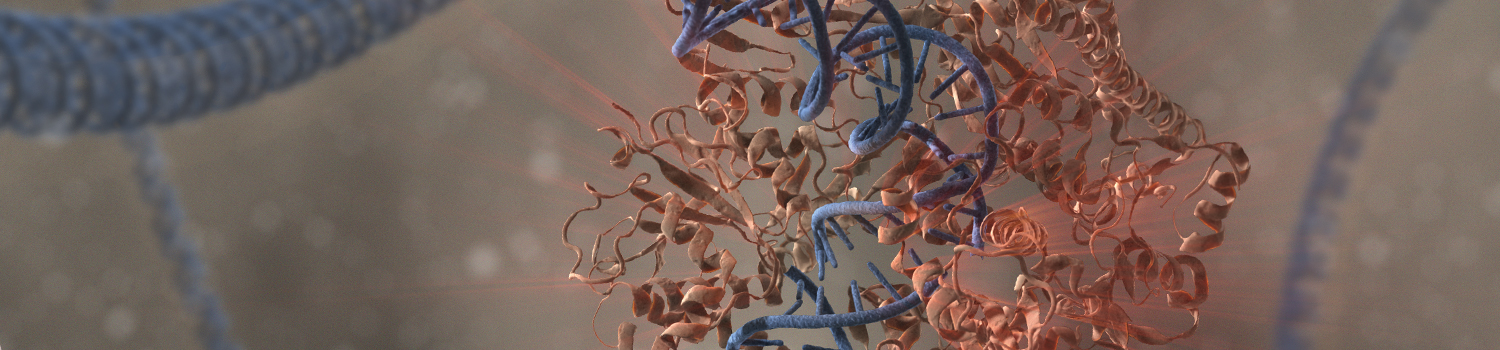
Closed-ended DNA & Protelomerases
Closed-ended DNA
As increasing biological therapeutics become a prominent reality, in particular mRNA therapeutics, adeno-associated viral (AAV) vectors, lentiviral (LV) vectors and DNA-based gene therapies, successful production hinges upon high-quality DNA starting materials. Closed-ended DNA is a class of emerging vector technologies that exhibits significant advantages over traditional plasmid vectors propagated through bacterial systems, mainly:
- Superior stability (e.g. from exonucleases) from covalently closed ends
- Greater structural stability as linear molecules (e.g. free of stress from supercoiling)
- Ability to be produced via cell-free methods, reducing production time
- No need for immunogenic prokaryotic sequence carryover
These vectors, also commonly called linear covalently closed (LCC) DNA, such as dbDNA™ (Doggybone™ DNA), enable the production of therapeutics with reduced safety risks (i.e. no immunogenic antibiotic resistance genes, plasmid backbones, or elements that could increase the risk of horizontal gene transfer). LCC vectors also reduce the risk of chromosomal integration as the hairpin ends effectively introduce chromosomal breaks that trigger apoptosis.
In addition to these benefits, closed-ended DNA impart improved efficacy to many downstream applications. For example, the covalently closed ends inhibit non-homologous end joining (NHEJ) thus bolstering homology-directed repair (HDR) in gene editing applications. In AAV production, the flexible nature of closed-ended DNA production allows for fine tuning to improve transgene loading and expression.
The key enzymatic modality enabling the creation of these novel vectors is that of telomere resolvases otherwise known as protelomerases.
Protelomerases
Protelomerases, or telomere resolvases, are unique enzymes which aid in the maintenance of linear DNA chromosomes in some bacteriophages and bacterial species. The enzyme introduces a double-strand break at a specific site, and then closes these ends via hairpin formation.
The first telomere resolvase reported was that of the N15 bacteriophage (and around the same time poxvirus) – which harnesses a unique linear, covalently closed prophage – a prokaryotic telomerase (protelomerase) able to rescue the unique prophage from circularization through replication. These enzymes are now known to introduce strand breakage through a mechanism similar to tyrosine recombinases, and select for hairpin formation through structural manipulations like underwinding and "out-of-plane" bending of the substrate prior to cleavage.
By incorporating the recognition sequences unique to these enzymes into synthetic constructs, the enzymatic activity of protelomerases can be exploited to generate LCC DNA vectors such as those discussed above.
Choose Product:
Choose Type:
- Practical Tips for Making and Working with dbDNA™
Usage Guidelines
Products and content are covered by one or more patents, trademarks and/or copyrights owned or controlled by New England Biolabs, Inc (NEB). The use of trademark symbols does not necessarily indicate that the name is trademarked in the country where it is being read; it indicates where the content was originally developed. All other trademarks are the property of their respective owners. The use of this product may require the buyer to obtain additional third-party intellectual property rights for certain applications. For more information, please email busdev@neb.com.
This product is intended for research purposes only. This product is not intended to be used for therapeutic or diagnostic purposes in humans or animals.
Ineligible item added to cart
Based on your Freezer Program type, you are trying to add a product to your cart that is either not allowed or not allowed with the existing contents of your cart. Please review and update your order accordingly. If you have any questions, please contact Customer Support at freezers@neb.com or 1-800-632-5227 x 8.