
Unlocking the Power of DNA Repair Enzymes in Molecular Biology Workflows
Posted on Wednesday, October 22, 2025
By
Topic: Tips for the lab

DNA damage is an inevitable consequence of biological processes and environmental exposure. Many types of DNA damage result from exposure to various chemicals, physical conditions, aging, or manipulation. From oxidation to deamination, modified bases can lead to mutagenic effects that put organisms at risk of disorder and disease.
By contrast, DNA modifications can also serve as a springboard for innovations in molecular biology workflows. Cells respond to the risk of accumulated DNA damage and loss of genome integrity by utilizing cogent DNA repair enzymes. At NEB, we investigate how modified bases that arise naturally in DNA through replication errors, enzymatic modification or spontaneous damage can also be intentionally engineered and paired with their cognate DNA repair enzymes to yield powerful methods. This approach can be valuable in a range of applications, including diagnostic assays, genome editing, next-generation sequencing, cloning and, naturally, repairing bases in degraded DNA samples.
When you’re developing your own custom workflow, it’s helpful to understand the properties of DNA repair enzymes and the design options associated with cleaving modified bases. This post provides guidance.
You can also watch our webinar on this topic and reach out to our technical support scientists or customized solutions team for deeper insights on your specific project.
Use a modified base or mismatch type as your starting point
We recommend using the primary substrate of a DNA repair enzyme, a modified base or mismatch, as your starting point when designing a novel molecular biology workflow. With a good understanding of commonly used substrates, you can confidently explore glycosylase and endonuclease options.
Oxidation and deamination of DNA bases are common types of DNA modifications that often give rise to mutagenic effects. Many types of base modifications are created by oxidation; however, the conversion of guanine to 8-oxoguanine (8-oxoG) is one of the most frequent. This type of oxidative damage is mutagenic because 8-oxoG can base pair with adenine instead of cytosine.
On the other hand, deamination can occur through various means, including spontaneous hydrolysis, deamination by deaminase enzymes, or from environmental factors. External environmental factors include exposures to radiation, high temperatures, reactive oxygen species generated by respiration, and/or nitrosative stress. All can cause the removal of an amino group from a nitrogenous base, resulting in deamination.
Deaminated bases can then lead to the formation of mutagenic lesions. Inosine is formed when adenine loses an amine group. Uracil is formed when cytosine loses an amine group. Adenine is deaminated to hypoxanthine. Less commonly, xanthine lesions in DNA can be formed when guanine loses an amine group. Xanthine typically forms as an intermediate molecule in the purine degradation pathway when xanthine oxidase oxidizes hypoxanthine.
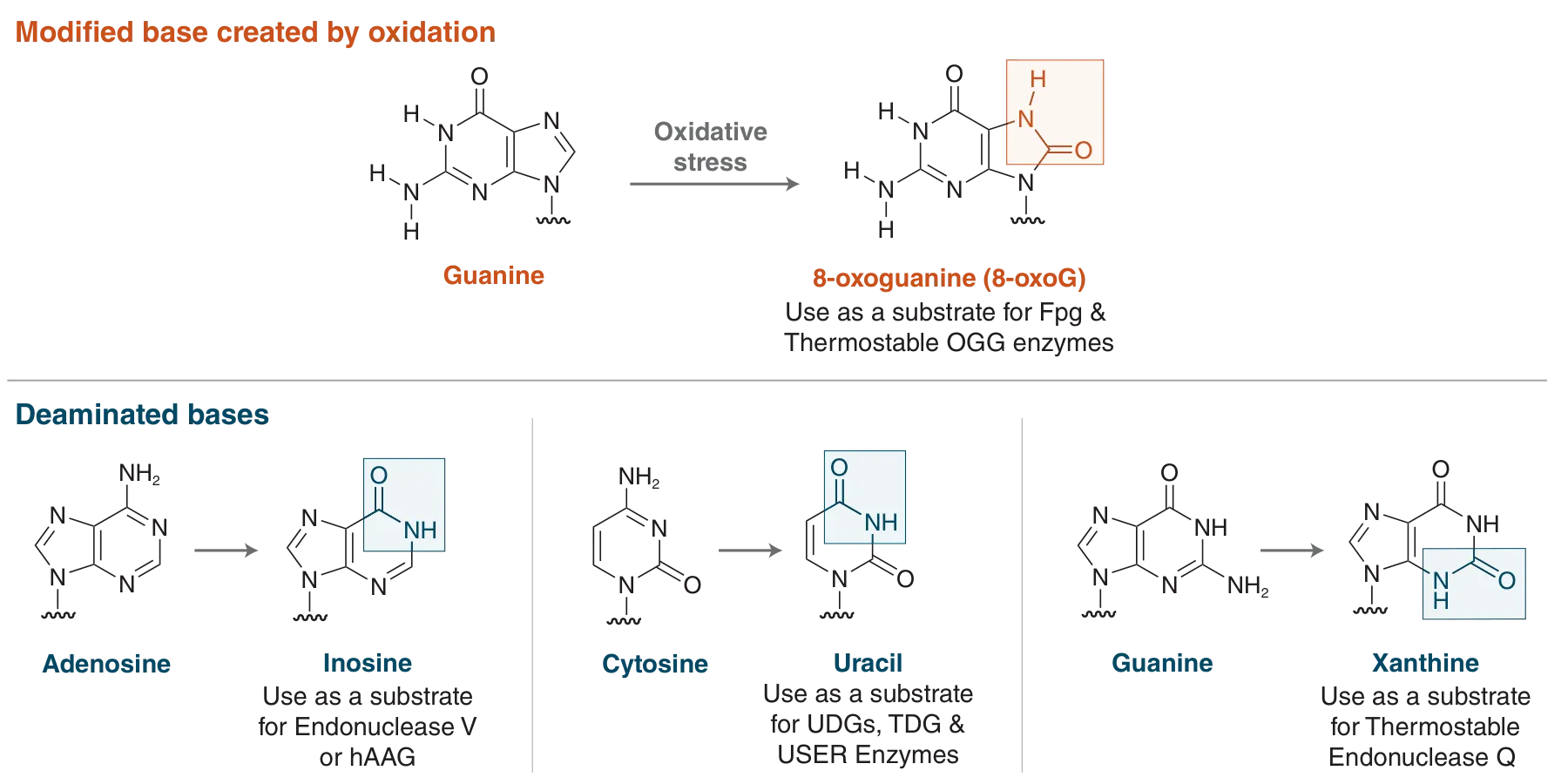
Oxidation and deamination of DNA bases are common types of DNA modifications that often give rise to mutagenic effects. The most common form of oxidative damage occurs when guanine is oxidized to 8-oxoguanine (8-oxoG). Deamination (which can occur through various means) of adenosine, cytosine and guanine forms inosine, uracil and xanthine, respectively, when they lose an amine group.
Narrow down your choices of DNA repair enzymes
Once you’ve determined the primary substrate, narrow down your enzyme choices by examining the cleavage site, desired cleavage products, and termini created from cleavage. It’s also helpful to consider the workflow advantages that can be achieved by leveraging enzyme substrate specificity, optimal temperature ranges and/or one-step enabling formulations. NEB offers a suite of enzymes tailored to recognizing and cleaving specific DNA modifications, along with guidance to help you select the right enzyme to meet your goals.
Evaluate enzyme suitability based on these key properties:
- Cleavage site
- Desired cleavage products
- Termini created from cleavage
Achieve workflow advantages based on these characteristics:
- Substrate specificity
- Optimal temperature range
- Formulation

Compare enzymes using this selection chart: Properties of DNA Repair Enzymes and Structure-specific Endonucleases
Explore tactics with common DNA repair enzyme cleavage targets: 8-oxoguanine, inosine, uracil, and xanthine
Let’s take a look at various experimental design options for common substrates and why we recommend specific enzymes when working with them. The DNA repair enzymes shared below have been highly characterized. Many are offered in custom formulations and large volumes, which can be helpful when you want to scale up a successful workflow.
Experimental design considerations when cleaving at 8-oxoguanine
Recall that conversion of guanine to 8-oxoguanine (8-oxoG) is one of the most frequent base modifications. Enzymes like Fpg (NEB #M0240) and Thermostable OGG (NEB #M0464) target oxidatively damaged guanines. Both Fpg and Thermostable OGG enzymes are bifunctional DNA glycosylases and apurinic/apyrimidinic lyases (AP lyases) that will recognize and remove a damaged purine base. First, the glycosylase activity of each enzyme will recognize the 8-oxoguanine in a DNA duplex and remove the damaged base. The AP lyase activity will then cleave the DNA at the generated abasic or AP site to create a 1-nucleotide gap at the site of the 8-oxoG with distinct cleavage products and temperature profiles.
A key difference between these two enzymes is their cleavage products. Fpg leaves a phosphate group on both the 3′ and 5′ ends. In contrast, Thermostable OGG leaves a 3′-phospho-α,β-unsaturated aldehyde and a 5′ phosphate at the site of the resulting 1-nt gap. As a result, Thermostable OGG cleavage at an 8-oxoG site produces ends that are not directly ligatable. This is because ligation requires a 3′-OH and a 5′ phosphate. By comparison, Fpg cleavage at an 8-oxoG site generates a 5′ phosphate that is already suitable for downstream ligation.
Temperature conditions can be used to control the activity of these two enzymes. Fpg is active at 37°C and can be easily heat-inactivated, making it well-suited for one-pot workflows. In contrast, Thermostable OGG functions over a broad temperature range (25–80°C), with optimal activity between 65–75°C, meaning it cannot be heat-inactivated and must be removed from the reaction by other means (e.g., enzymatically removed by Thermolabile Proteinase K or by column or bead-based purification of the DNA). This difference in temperature preference and ability to be heat-inactivated can make Fpg more advantageous for certain applications.
Another important distinction between Fpg and Thermostable OGG is substrate specificity: Fpg is relatively promiscuous, acting on a variety of modified bases (including, but not limited to, 8-oxoguanine), whereas Thermostable OGG is highly specific for 8-oxoguanine.
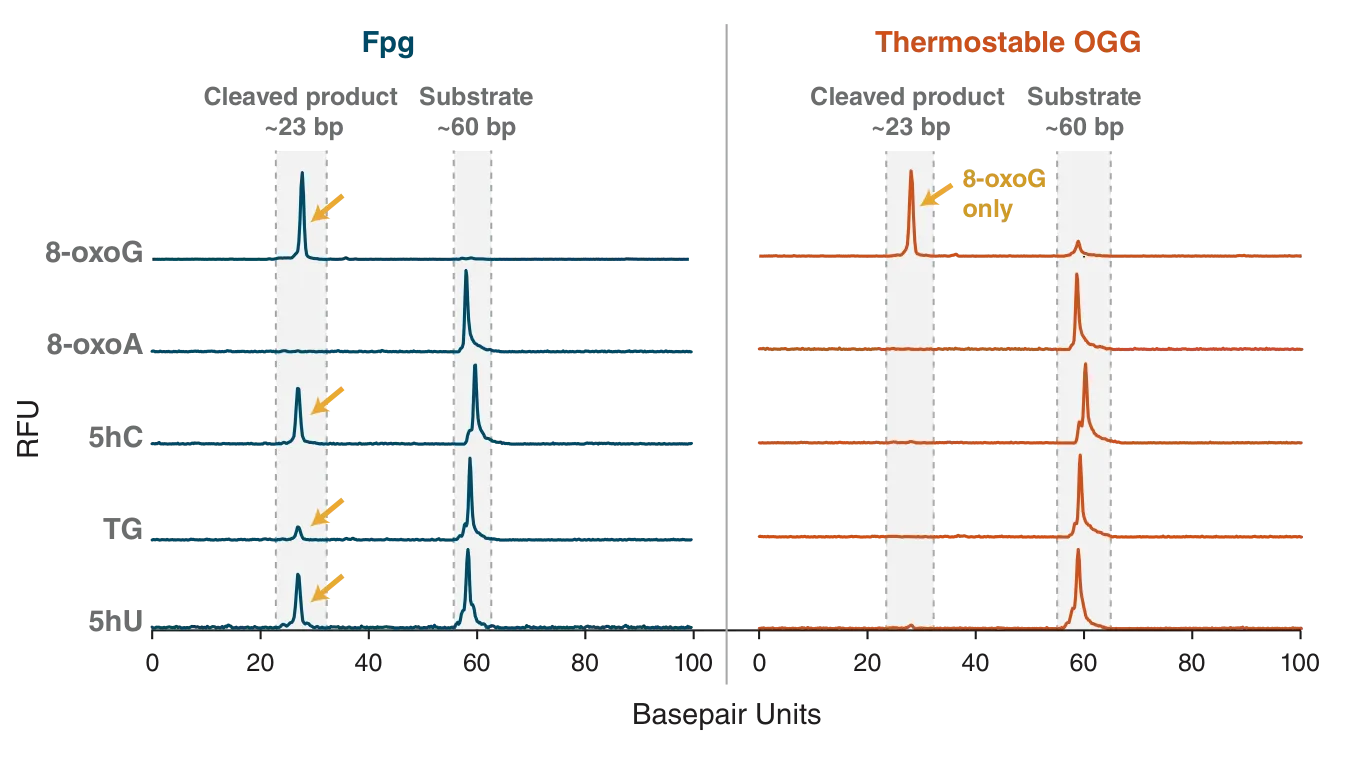
Thermostable OGG (8 U) or Fpg (8 U) were incubated with fluorescently labeled dsDNA containing modified bases and analyzed by capillary electrophoresis to demonstrate substrate specificities.
Experimental design considerations when cleaving at inosine (deaminated adenosine)
Deamination of deoxyadenosine can give rise to deoxyinosine in DNA. NEB’s DNA repair enzymes that use deoxyinosine as a substrate can offer benefits for iterative or cyclical molecular workflows, or specificity and additional steps if cleavage is desired.
Endonuclease V (NEB #M0305) recognizes deoxyinosines in both double- and single-stranded DNA and cleaves the second phosphodiester bond downstream (3′) of the lesion. Unlike glycosylases, it does not remove the damaged base; instead, it leaves the deoxyinosine intact while cutting the DNA. This feature can be advantageous in iterative or cyclical workflows where the modified base must remain on one DNA fragment for reuse in subsequent reactions. The resulting nick has a 3′ hydroxyl and a 5′ phosphate, making both ends directly ligatable by DNA ligase. However, while Endonuclease V primarily targets deoxyinosine, it also shows lower-level activity on other DNA structures, including AP sites, urea, base mismatches, insertion/deletion mismatches, hairpins, unpaired loops, flaps, and pseudo-Y structures. This broader activity may make it unsuitable for certain workflows.
Human Alkyl Adenine DNA Glycosylase (hAAG) (NEB #M0313) lacks AP lyase activity; however, it can recognize and remove an inosine base, resulting in an AP site. As hAAG is only a glycosylase, an additional step of base hydrolysis or cleavage of the AP site by an endonuclease (e.g., Endonuclease III (NEB #M0268), Endonuclease IV (NEB #M0304), or Endonuclease VIII (NEB #M0299)) would then be required to cleave the DNA backbone.
Experimental design considerations when cleaving at uracil (deaminated cytosine and 5-methylcytosine)
As a constituent nucleobase in RNA, the incorporation and cleavage of uracil are widely used in molecular biology. While spontaneous deamination events of cytosine can generate uracil in DNA, cytosince can also be enzymatically deaminated by deaminase enzymes such as APOBEC3A (NEB #M0648).
Several uracil DNA-glycosylases (UDGs) possess features that are beneficial to specific workflows. E. coli UDG (NEB #M0280) is optimally active at 37 °C, ideal for mesophilic workflows, but cannot be heat-inactivated and must be removed to avoid interfering with downstream steps. Antarctic Thermolabile UDG (NEB #M0372) also works best at 37 °C but can be easily heat-inactivated, making it better for one-pot, multi-step workflows. Thermostable options include Afu UDG (NEB #M0279) (active from 25–65 °C) and a WarmStart version, which remains inactive below 42 °C. WarmStart Afu UDG (NEB #M1282) can be included in reactions at 37 °C (where it is inactive), then activated by raising the temperature above 42 °C, allowing for temperature-controlled UDG activity and the simultaneous inactivation of enzymes from earlier workflow steps.
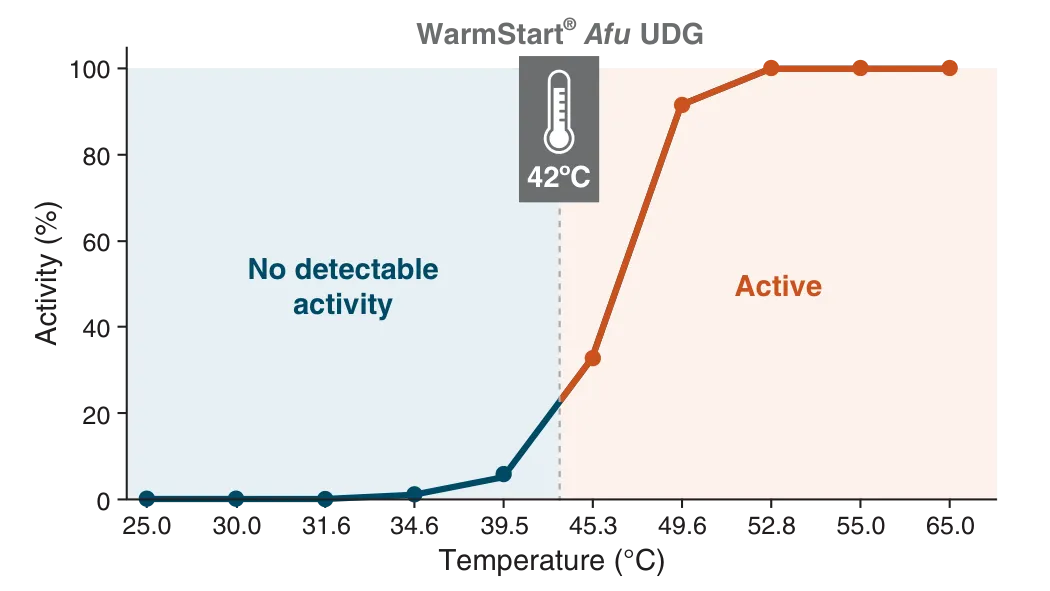
WarmStart technology inhibits enzyme activity below 42°C and allows inactivation of enzymes from previous workflow steps.
In addition to deamination of cytosine producing a uracil, spontaneous deamination events of 5-methylcytosine (5mC) can also generate a thymine. These deamination events (of a C or 5mC) create U:G and T:G mismatches within DNA, respectively. While the U:G mismatches can be resolved by UDG enzymes (discussed above), T:G mismatches cannot be removed or repaired by UDGs.
For this use case, we recommend Thymine-DNA Glycosylase (TDG) (NEB #M0766) to excise thymine when base-paired with guanine (forming a T:G mismatch), leaving an abasic site. If cleavage at the uracil is required as part of a workflow, these UDGs/TDG must be paired with an additional step of base hydrolysis (chemical cleavage) or enzymatic cleavage at the AP site by an endonuclease to cleave the DNA backbone. For example, Endonuclease III, Endonuclease IV, or Endonuclease VIII (NEB #M0268, #M0304 or #M0299).
For one-step cleavage at deoxyuracils, NEB offers a suite of USER® Enzymes, or Uracil-specific Excision Reagents. These USER enzymes are a pre-formulated combination of a UDG and an AP endonuclease. USER® Enzymes (I, II, III) (NEB #M5505, #M5508, #M5509) specialize in uracil excision, leaving unique ends and offering different temperature sensitivities. The specific UDG and AP endonuclease in each USER formulation determine its properties and suitability for specific applications.
In the original USER Enzyme formulation, a combination of E. coli UDG and Endonuclease VIII work together to remove and cleave at a uracil base, creating a 1-nucleotide gap with a 3’ and 5’ phosphate.
Thermolabile USER II Enzyme (NEB # M5508), a mixture of Antarctic Thermolabile UDG and Endonuclease III, has the same functionality of USER Enzyme, where the Antarctic Thermolabile UDG excises the uracil bases leaving an AP site that is then cut by Endo III, leaving a 1 nt gap. However, unlike the original USER Enzyme, Thermolabile USER II Enzyme enables heat inactivation after 10 minutes at 65°C, which is an advantage for some workflows.
NEB also offers a thermostable version, Thermostable USER III Enzyme (NEB #M5509). This enzyme cocktail is comprised of Afu UDG and Endonuclease IV, again having the same functionality of USER Enzyme and Thermolabile USER II Enzyme. However, it is active at higher temperatures, between 50-75°C.
While all 3 USER Enzymes accomplish the same result, they each do so by different endonucleases. This is important because it means each variation of USER Enzyme leaves different ends at the site of cleavage.
USER Enzyme contains Endonuclease VIII and leaves a 3’ and 5’ phosphate after cleavage. Thermolabile USER II Enzyme contains Endonuclease III and leaves a 3′-phospho-α, β-unsaturated aldehyde and 5′ phosphate after cleavage. Thermostable USER III Enzyme contains Endonuclease IV and leaves a 3′-hydroxyl and 5′-deoxyribose phosphate.
If downstream ligation is critical, note the differences in end compatibility between USER enzymes. USER Enzyme and Thermolabile USER II Enzyme produce 5′ ends that are ligatable (5′ phosphate) but 3′ ends that are not. In contrast, Thermostable USER III Enzyme generates 3′ ends that are ligatable (3′ OH) but 5′ ends that require end repair before ligation. In all cases, the ends produced cannot be re-ligated to each other, since cleavage removes the necessary combination of a 3′ hydroxyl and 5′ phosphate from the same break.
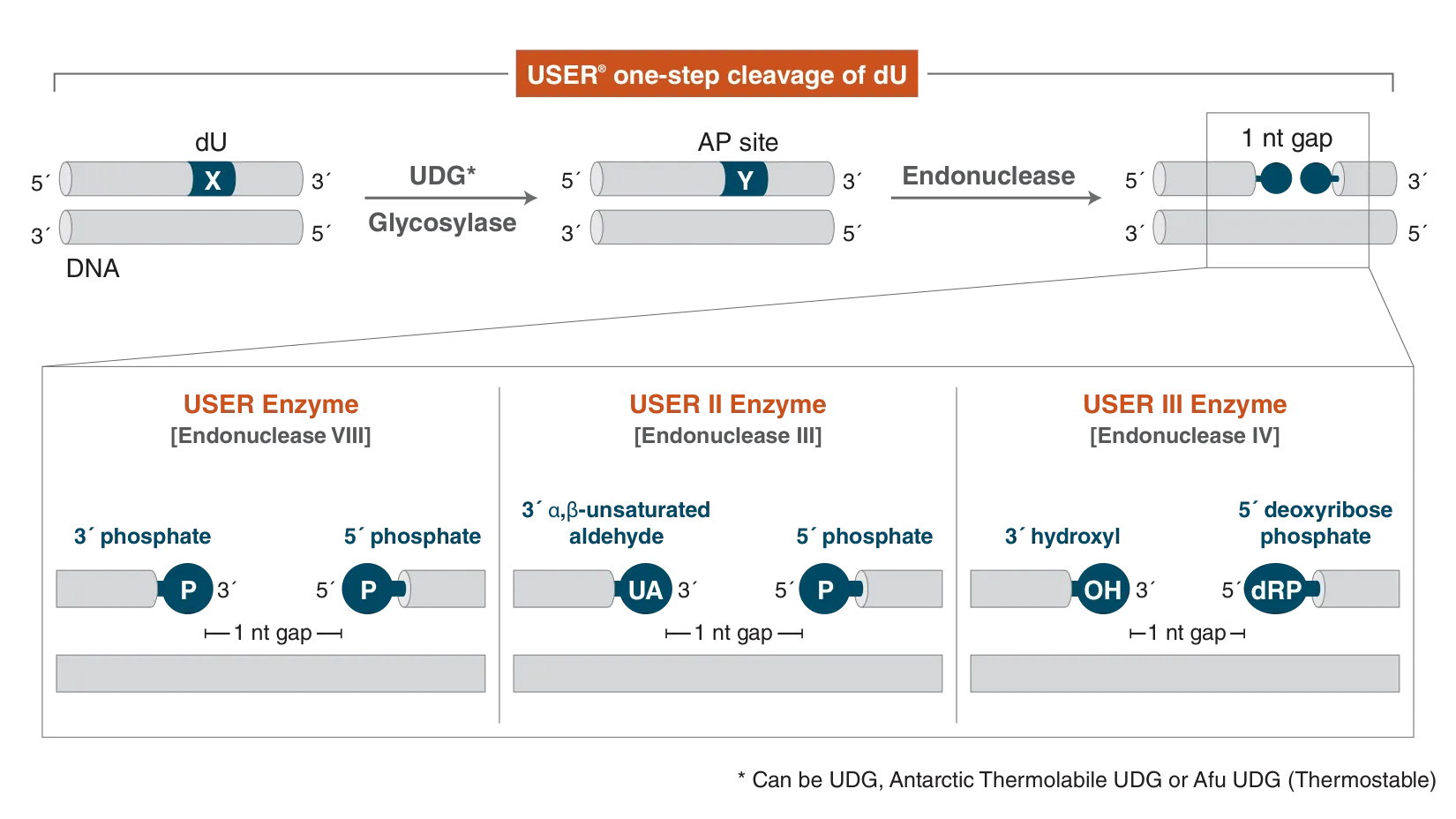
In addition to the three USER formats, USER Enzyme, Thermolabile USER II Enzyme and Thermostable USER III Enzyme, you can alternatively mix and match any of our UDG enzymes with an endonuclease to suit your needs, depending on what ends are required in your workflow at the cleavage site.
Experimental considerations when cleaving at xanthosine (deaminated guanosine)
Guanine deamination can lead to the natural incorporation of xanthine in DNA. While cells have evolved multi-step DNA repair pathways, specifically designed to recognize and remove xanthine bases from DNA, NEB is the first to commercially offer a single enzyme, Thermostable Endonuclease Q (NEB #M0701), that will recognize and cleave a xanthosine-modified base. In addition to this new specificity toward xanthine, Thermostable Endonuclease Q is actually more efficient at recognizing and cleaving other deaminated bases, including uracils and inosines.
While USER enzymes typically show ~3–4× lower activity on uracil in ssDNA compared to dsDNA, Thermostable Endonuclease Q shows the opposite preference; it is approximately 4× more active on uracil in ssDNA than in dsDNA. For inosine, Thermostable Endonuclease Q exhibits similar activity in both ssDNA and dsDNA contexts, but for xanthosine, it is more active in dsDNA than in ssDNA.
Thermostable Endonuclease Q cleaves 5’ to a uracil, inosine, or xanthosine, leaving the modified base intact (useful for multi-step or cyclic workflows where the lesion must remain). Unlike any USER enzyme formulation, it produces a nick with a 3’ OH and 5′ phosphate, allowing direct ligation by DNA ligase. As a result, either DNA fragment generated can be seamlessly joined to another fragment without additional end polishing.
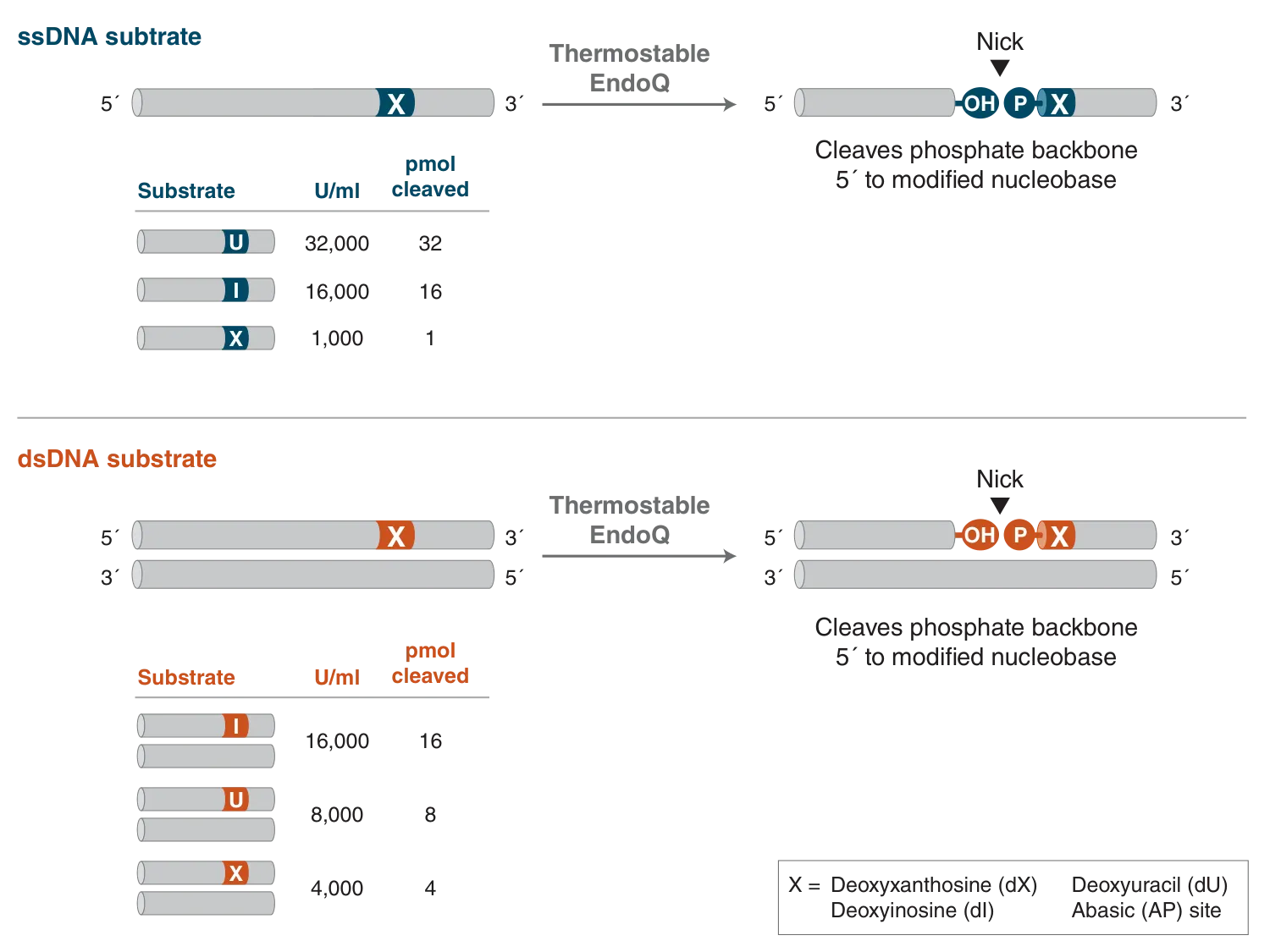
For cleaving uracil in dsDNA, 1 µl (or 1 unit) of any USER enzyme will cleave 10 pmol of DNA, whereas the same amount of Thermostable Endonuclease Q cleaves only 8 pmol. Thus, USER enzymes are generally preferred for uracil cleavage in dsDNA, unless retaining the uracil or leaving a ligatable nick—both features of Thermostable Endonuclease Q—is advantageous.
Experimental considerations when cleaving close to the ends of DNA with repair enzymes
Cleavage of double- or single-stranded DNA oligos from a solid surface is another valuable utility for molecular workflows. Enzymes that cleave close to the ends of DNA have been used to add adaptors for multiplexed next-generation library prep, as well as directional RNA library prep. Enzymatic DNA synthesis is an exciting area in synthetic biology focused on generating longer, more complex DNA with fewer errors. Once enzymatic DNA synthesis is complete, the DNA needs to be liberated. You can envision leveraging modified bases and repair enzymes to remove DNA from beads in these workflows. Whichever workflow you concentrate on, it is critical to understand each specific enzyme’s ability to cleave close to the ends of DNA.
In dsDNA, all USER enzymes efficiently cleave uracil located just 3 nucleotides from the 5′ end. In contrast, Thermostable Endonuclease Q shows reduced efficiency compared to other USERs when the uracil is 3 nucleotides from the 5′ end. At the 3’ end of dsDNA, Thermolabile USER II Enzyme, Thermostable USER III Enzyme and Thermostable Endonuclease Q all efficiently cleave a uracil only 3 nucleotides from the end of the DNA, whereas USER Enzyme requires at least 6 nucleotides from the 3’ end of dsDNA.
In ssDNA, USER enzymes require at least 9–12 nucleotides from the 5′ end and 6 nucleotides from the 3′ end for efficient uracil cleavage, struggling near the ends. In contrast, Thermostable Endonuclease Q can cleave uracil just 6 nucleotides from the 5′ end and 3 nucleotides from the 3′ end, making it the preferred choice for ssDNA cleavage from solid supports.
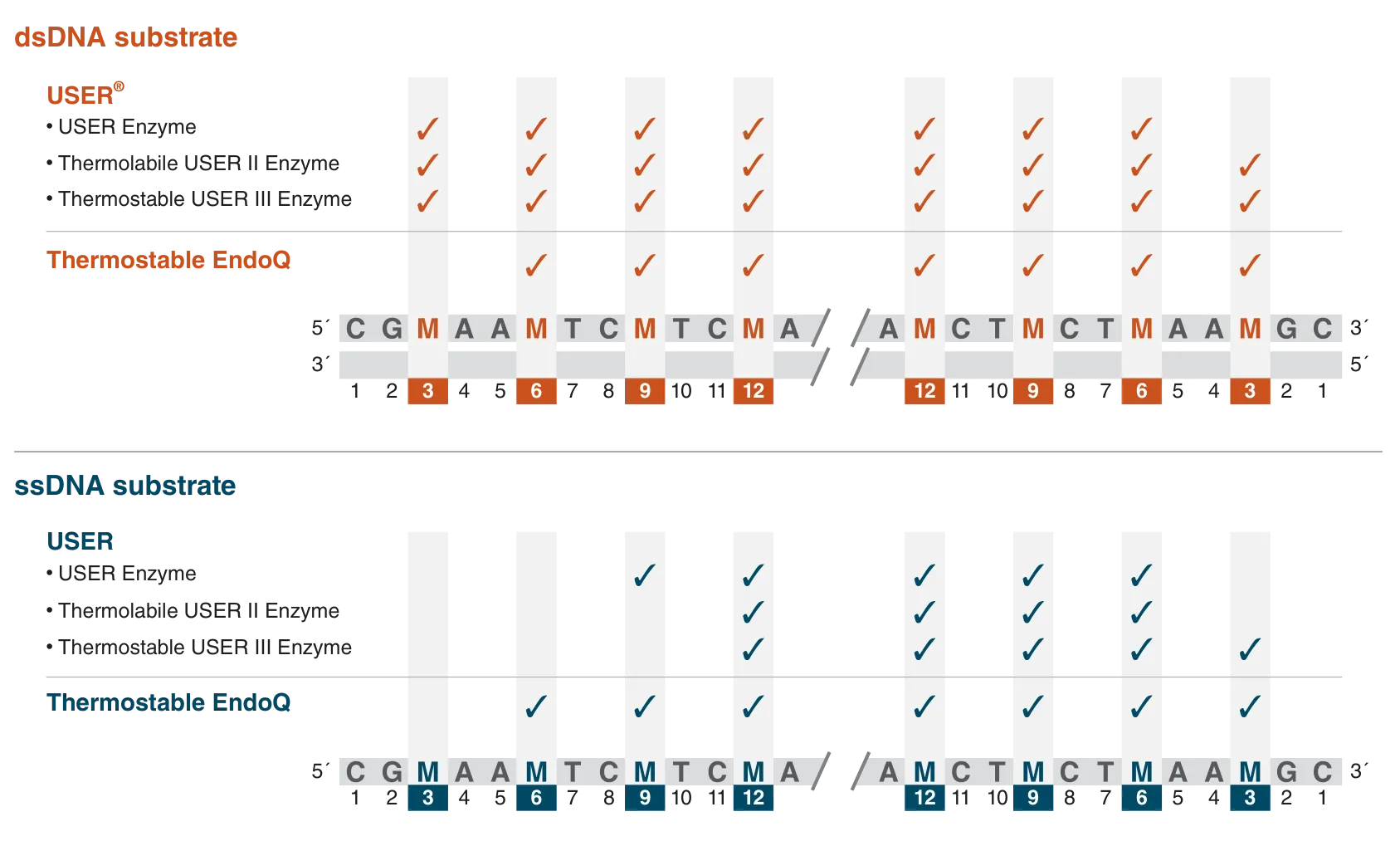
Enzymes that cleave close to ends have modified (M) nucleotide position requirements and differing efficiencies based on substrate.
Review buffer compatibility when selecting the optimal enzyme(s)
Importantly, beyond factors already discussed, buffer compatibility should not only be considered for each when pairing glycosylases with endonucleases, but also with other enzymes in the workflow.
Most DNA-modifying enzymes maintain significant activity (>50%) when used in rCutSmart Buffer (NEB #B6004), making this a good choice as a universal reaction buffer for workflows using these enzymes. If a workflow requires a custom buffer and rCutSmart Buffer is not an option, we have found that while the UDG enzymes tend to be rather salt-tolerant (maintaining up to 75% activity up to 500 mM salt conditions), accompanying endonucleases required for cleavage at modified bases are not as salt-tolerant. Therefore, cleavage of uracil in high salt conditions may require chemical cleavage or increased amounts of endonuclease for efficient cleavage at the generated AP site.
Use this chart to ensure optimal activity: Activity of DNA Modifying Enzymes in rCutSmart™ Buffer
Ready to design your new molecular workflow?
DNA repair enzymes are powerful tools for molecular biology workflows. By understanding their specificities and applications, researchers can unlock new possibilities in cloning, sequencing, and beyond.
Whatever the requirements of your workflow with DNA-modifying enzymes, NEB’s online resources—including selection charts and substrate specificity tables—make it easy to identify the right enzymes for your needs.
- Find out more about the Activities of DNA Repair Enzymes and Structure-specific Endonucleases
- Consider the Properties of DNA Repair Enzymes and Structure-specific Endonucleases
- Discover the utility of DNA Repair Enzymes on Damaged and Non-standard Bases
- Watch the webinar
- Contact the Custom Solutions Team
Don’t miss out on our latest NEBinspired blog releases!
- Sign up to receive our e-newsletter
- Download your favorite feed reader and subscribe to our RSS feed
Be a part of NEBinspired! Submit your idea to have it featured in our blog.