Advancing DNA Barcoding at the Royal Botanic Garden Edinburgh
Posted on Thursday, September 25, 2025
By
Topic: Environment and social responsibility, Tips for the lab

The application of DNA sequencing to biodiversity assessments using DNA barcoding has advanced the speed and scale of identifying unknown samples. It was a privilege to speak with Nattanon, who goes by Bom, Meeprom about his post-doctoral research at the Royal Botanic Garden in Edinburgh, Scotland, working in close collaboration with the Royal Commission for AlUla (RCU) and the University of Edinburgh, to learn how he is applying nanopore sequencing to drive conservation efforts using this approach.
Nattanon’s journey to the Royal Botanic Gardens was rooted in a background of plant DNA research and a passion for developing methods to sequence historical DNA samples. Combining his Ph.D. in plant evolution with skills in DNA extraction, library preparation, and sequencing data analysis, he worked to develop a process to leverage the advances in DNA sequencing towards ecological research focused on generating reference sequence data using historical herbarium specimens. Then he applied these data towards metabarcoding projects to identify samples from the field.
Successful strategies in barcoding DNA analyses of herbivore diets

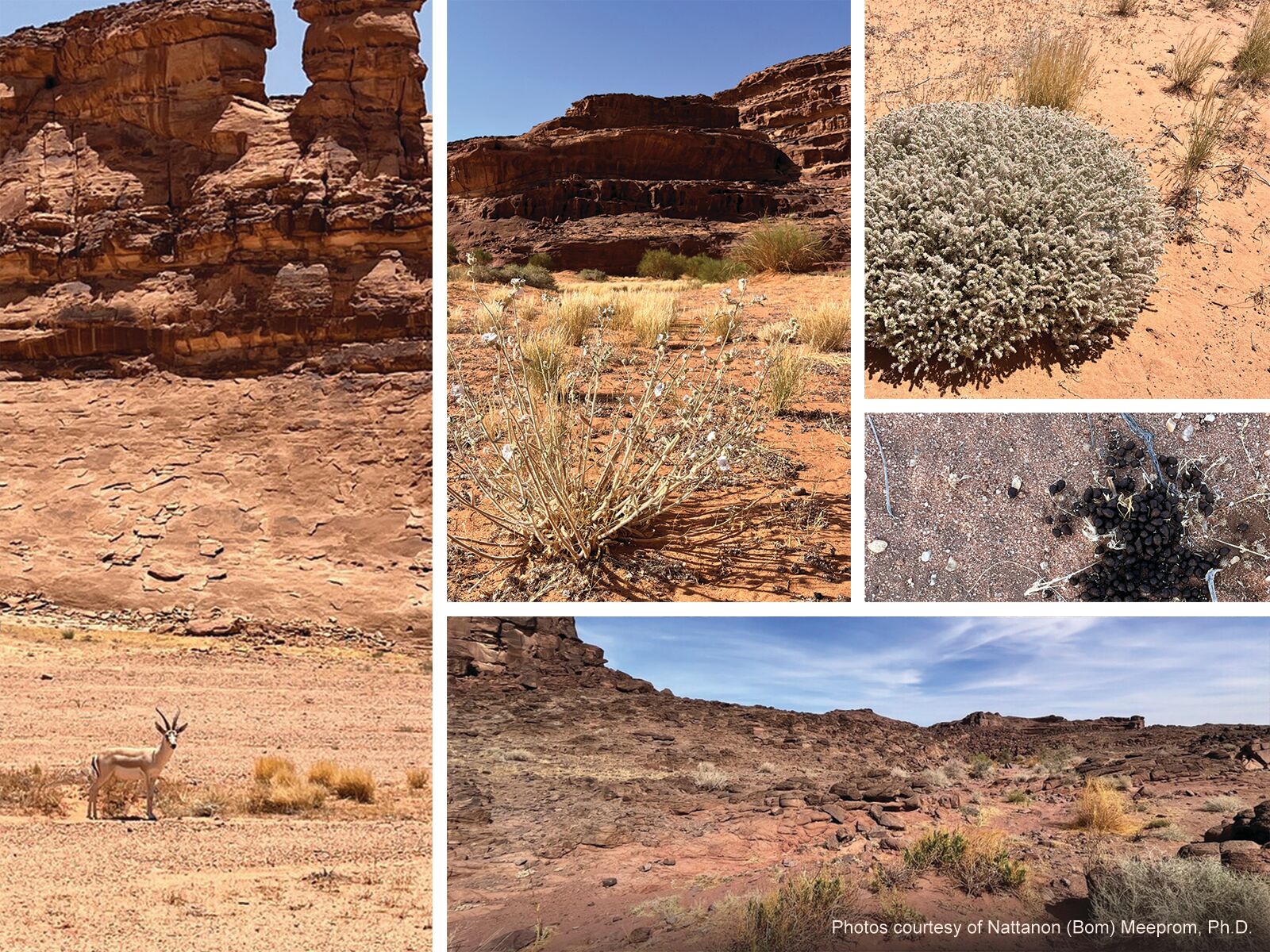
Nattanon Meeprom's work significantly contributes to understanding animal diets and ecological interactions. His research centered on constructing DNA libraries using plant samples, including historic herbarium specimens, to extract DNA, prepare libraries, sequence, and perform de novo assemblies for novel genomes. Using these reference genomes, Nattanon was able to identify targets in the chloroplast and ribosomal genomes that can be used for positive identification of a given species, without the need for deep whole genome sequencing. He then used these reference genomes to map DNA sequences from the local fecal samples of Saudi Arabian animals, to identify which plants were being consumed by local herbivores.
The research team employs a method, known as “Genome skimming”, which involves rapidly sequencing the most abundant parts of a genome, using low-coverage, high-throughput sequencing methods. It is very useful in species identification and barcoding. This approach typically aims for 30-fold coverage, but in many cases, Nattanon was able to exceed 100-fold coverage of the conserved regions. The strategy enables crucial data for understanding ecological dynamics; however, there were some technical challenges to overcome.
The logistics of sample collection and transportation are critical in this kind of work. For this project, fecal and plant samples were collected from Saudi Arabia and transported to Edinburgh, while herbarium specimens were sourced from the Royal Botanic Garden herbarium. This sourcing process ensures a diverse and comprehensive collection of samples for DNA metabarcoding.
One of the main challenges in DNA metabarcoding is preventing DNA contamination in samples. Nattanon and members of the research team address this issue by using specific RNA probes to select plant DNA over human and host animal contamination during target capture, ensuring the accuracy and reliability of the DNA barcoding process.
Working with these various sample types, including animal fecal samples, collected plant specimens, and dried herbarium specimens, presented unique challenges. Fecal samples can contain bacteria, fungal, and animal DNA present at varying levels of degradation, rendering mechanical shearing challenging. Additionally, the presence of secondary metabolites in plants complicates the library preparation process, requiring specialized extraction methods to ensure the integrity of the DNA samples.
Nattanon was able to take advantage of a unified workflow to process a large number of samples efficiently using the NEBNext UltraExpress® DNA Library Prep Kit (NEB #E3325). He was able to apply a single protocol to process both herbarium and field species, greatly simplifying the processing and facilitating data analysis. Nattanon found both the speed and unified nature of the protocol particularly useful, obviating the need for varied adaptor dilutions and PCR cycle numbers, while employing integrated end-repair and dA-tailing in a single step. Nattanon also found the kit to be effective with low-input samples, producing usable libraries even with minimal DNA quantities. He found that his libraries retained complexity, and he was able to assemble his intended genome targets with ease.
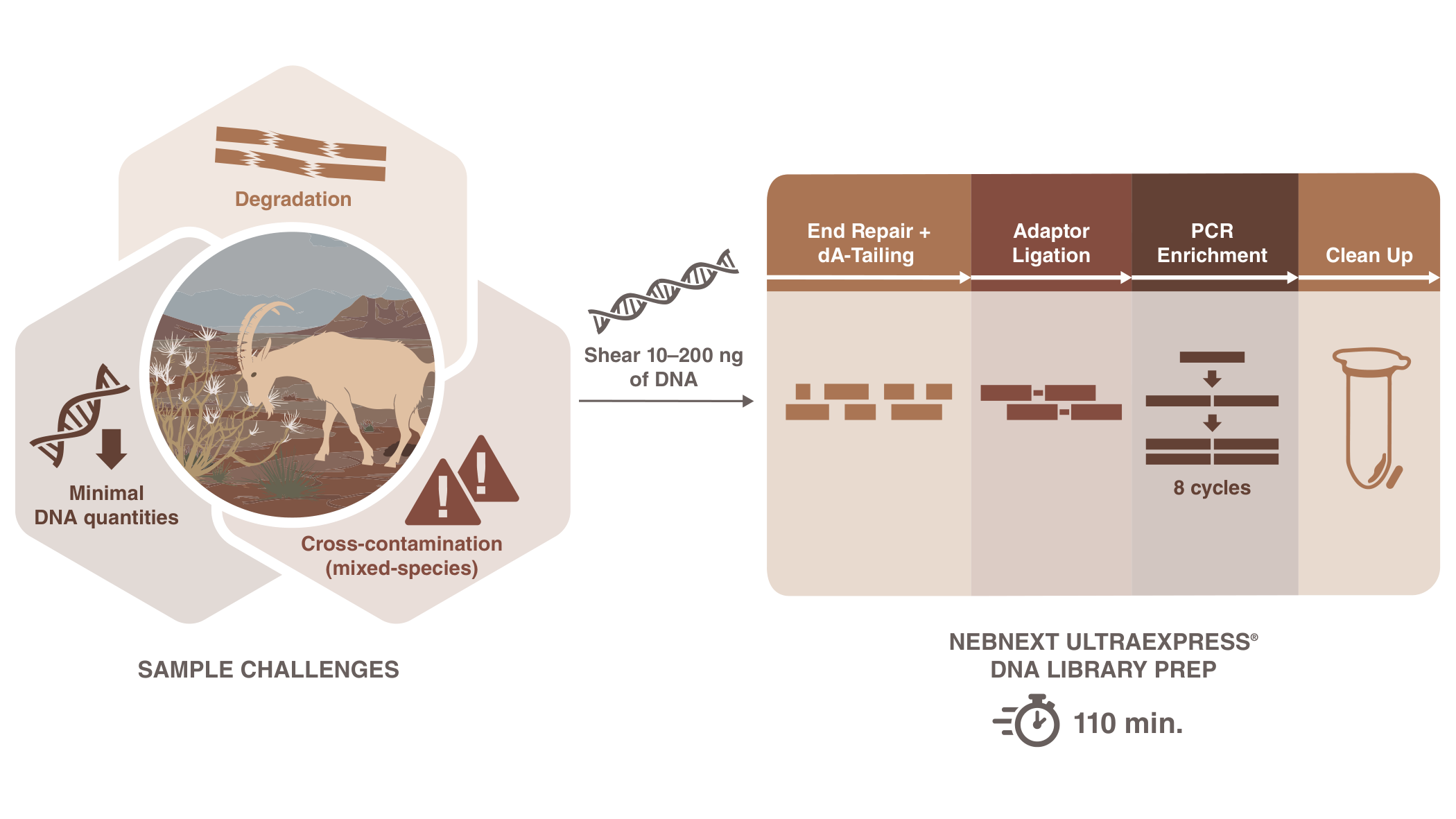
Finally, in line with the conservation efforts that underscore the work and the environmental values of the Royal Botanic Garden, the UltraExpress DNA Library Prep produced minimal plastic waste, requiring 32% fewer tubes and 50% fewer pipette tips when compared with alternative kits. Overall, Nattanon concluded, “Being able to build the DNA libraries from such degraded and low input DNA just opened up a lot of opportunities for genetics studies of the plants”.
Don’t miss out on our latest NEBinspired blog releases!
- Sign up to receive our e-newsletter
- Download your favorite feed reader and subscribe to our RSS feed
Be a part of NEBinspired! Submit your idea to have it featured in our blog.