
What to Do After Your Life Science Degree: Post-baccalaureate and Post-doctoral Programs
Posted on Wednesday, January 14, 2026
By
Topic: Career advice
Regardless of whether you’re graduating from a bachelor’s, master’s or doctoral program, there are a wide range of opportunities for launching your post-degree career in biology. With many options to pick from, how do you know which to choose, or even if a career in science is right for you?
Internships and post-degree programs offer a great transitional stage to gain experience and determine if academic research, industry or further education are a good fit for your career goals. Academic post-doctoral positions are common, but you can also find postdoc fellowships in industry. Post-baccalaureate programs both in and out of academia can also provide opportunities to develop research skills or meet prerequisites for further education.
This post highlights the advantages, considerations and comparisons of postbac, postdoc and internship experiences, and shares helpful insights from our student internship coordinator and one of our postdoc fellows.
What is a post-baccalaureate program?
Post-baccalaureate (postbac or postbacc) programs provide an opportunity to solidify foundations for further education. They can help you determine if graduate school is right for you and help meet prerequisites for programs. Postbacs are often associated with academia, but opportunities can also be found outside of colleges and universities.
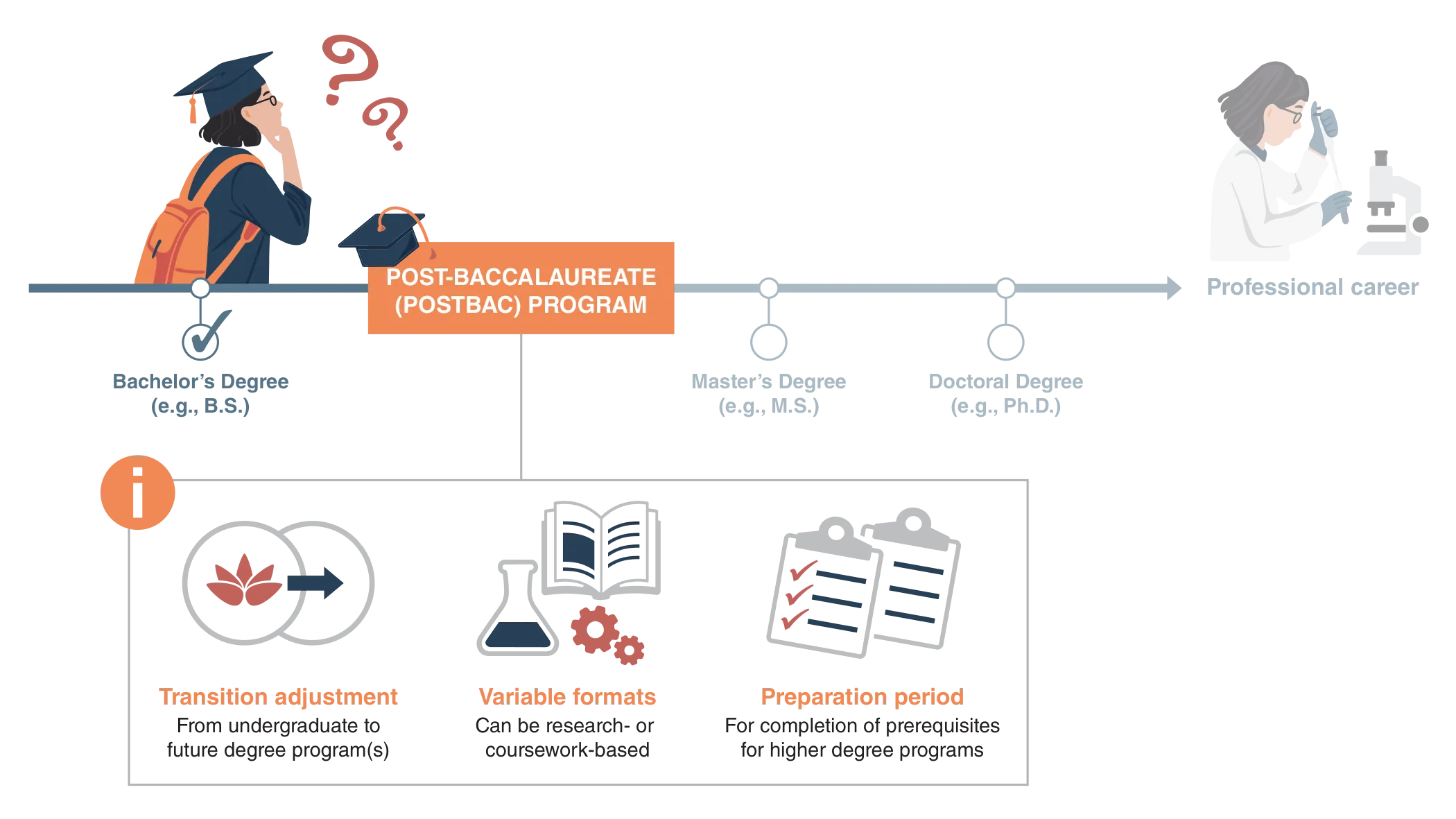
Each postbac program has different requirements and aims. Some programs may also aim to support students working toward a secondary bachelor’s degree. They generally range from one- to two-year programs and can be research focused or academic credit-based.
For example, three postbacs were instrumental to the development of the COVID-19 mRNA vaccine. Learn more about their experiences in our podcast, Interview with mRNA vaccine developers: Collaboration was key to the COVID vaccines.

Your career and degree advisors for your undergraduate studies can help you determine what programs are the best fit. If you have specific schools in mind for your next degree, the admissions offices for those colleges or universities can help determine if a postbac would improve your application.
What is a post-doctoral program?

Post-doctoral (postdoc) programs help with the transition out of a student role while still focusing on training essential skills. Like postbacs, these programs are often research-focused positions at an academic institution, but you can also find them outside of academia. Companies like New England Biolabs (NEB) offer postdoc opportunities. Postdoctoral fellow Leo Betancurt, Ph.D., highlights the research expertise, publishing opportunities and networking opportunities of industry postdocs.
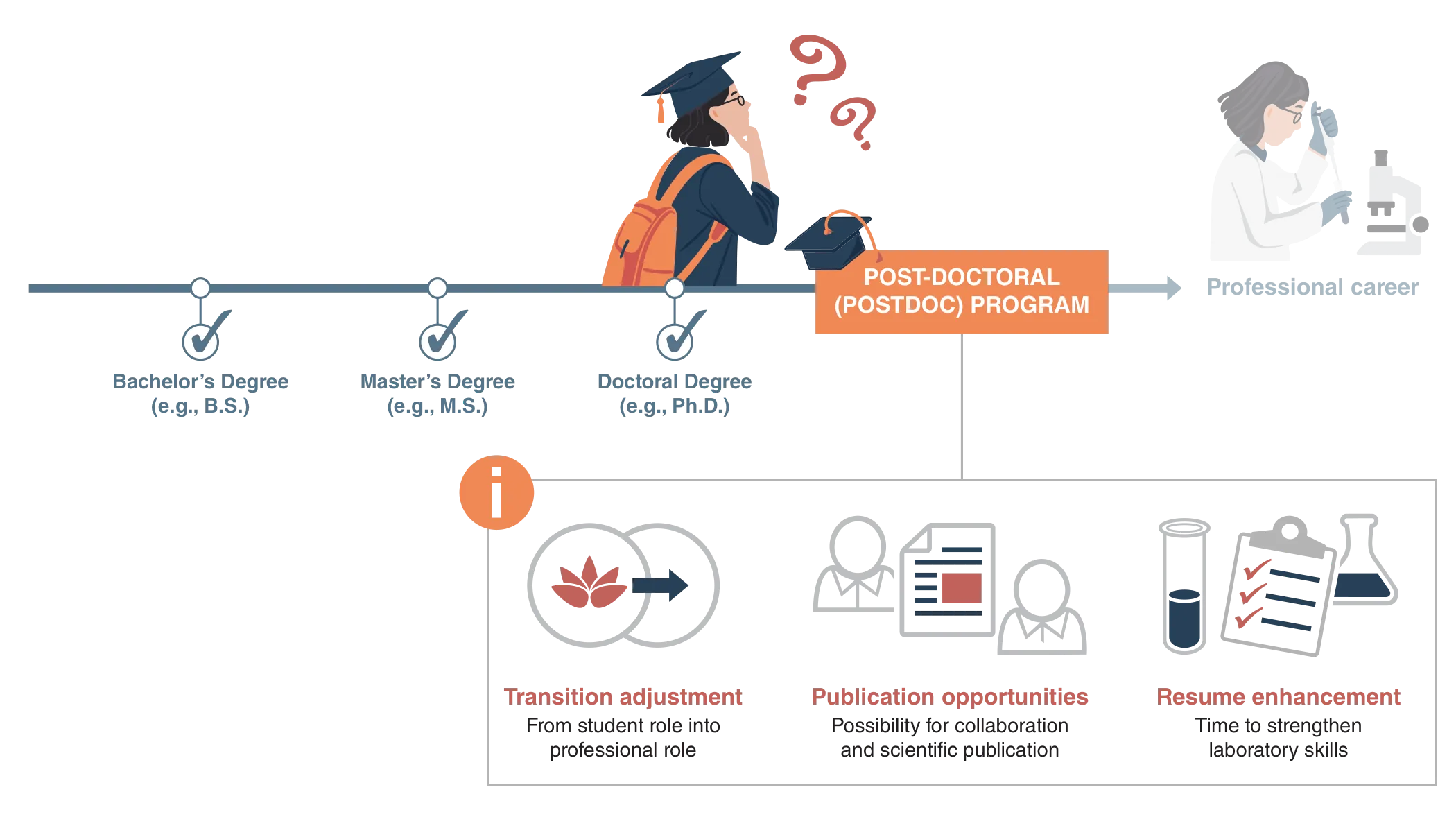
“I wanted to gain deeper expertise in research, especially in a place like NEB where basic research is strongly supported and new ideas are welcome, even from postdocs,” Betancurt said. “Publishing research articles was also very important to me. NEB encourages collaborations with academic labs, which brings in expertise from abroad.”
The lab group that Betancurt joined also does “backyard science” — quick experiments that allow them to quickly test a hypothesis under low pressure.
Betancurt’s Ph.D. and postdoc experiences helped him realize that research is his dream job. He emphasized how important passion for research is for science and recommended developing communication skills to help with presentations and collaboration.
“The diversity of people in science is what drives new ideas,” he said. “Ask questions, show excitement for new ideas, and find creative ways to communicate science.”
When should I consider an internship?

Internships can be for during or after your degree, depending on the specific program. For example, NEB's paid summer internship program is for students enrolled in high school or pursuing an undergraduate degree, and requires interns to be at least 18 years old for lab work. Master's student internships at NEB are longer positions specifically for students already pursuing their master's degree. Postbacs and postdocs generally require you to have completed your degree.
Internships can help build your lab experience for future courses in your undergraduate or future graduate programs. Lisa Maduzia, NEB's Summer Student Internship Program Manager, encourages students to apply to research internships even without having extensive lab experience.
"You can have the best technical skills, but what is more important is a willingness to learn, not being afraid to try, taking initiative, seeking out what else can be done, having a positive attitude, being a team player and communicating effectively," she said.
What are the considerations for evaluating post-degree programs?
When looking at your post-degree options, consider how positions and organizations align with your goals and opportunities. Maduzia recommends focusing on positive mentorship opportunities and lab culture that aligns with your needs and comfort. For example, Betancurt decided to accept a fellowship with NEB because of international and national collaboration that offers a hybrid between academia and industry, and because of the company’s values.
"People are always willing to help across different skill sets, and there’s a real sense that knowledge goes both ways," he said. "The mentorship is excellent, colleagues are always available to answer questions, which accelerates research and learning."
Postdocs generally are paid positions, but internships may be unpaid and postbacs may have tuition costs. Keep this in mind and communicate with financial aid offices if you need assistance with academic postbac fees. Many employers also offer tuition reimbursement for their employees, which postbac courses may be eligible for. Consider how long each program is as well, which can range from several weeks for some internships to up to five years for postdocs.
No matter what path you choose after your degree, all offer you a chance to experience science research in a different way and determine your career interests for success in academia or industry.
Don’t miss out on our latest NEBinspired blog releases!
- Sign up to receive our e-newsletter
- Download your favorite feed reader and subscribe to our RSS feed
Be a part of NEBinspired! Submit your idea to have it featured in our blog.