Putting Molecular Diagnostics in the Hands of Conservationists
How Conservation X Labs accelerated development of field-ready genetic tests with NEB LyoPrime™ Products
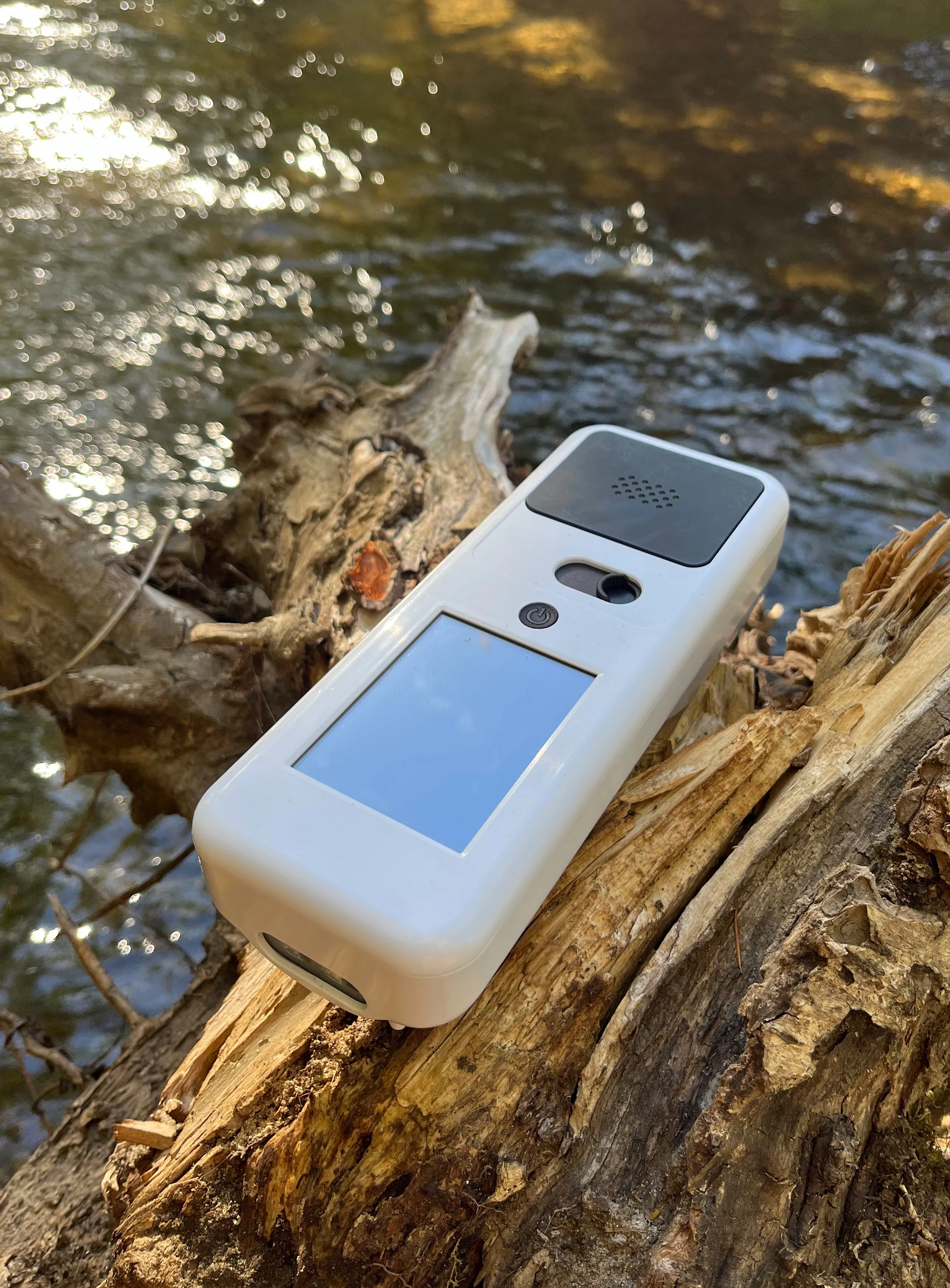
In the early stages of development, Conservation X Labs formulated its own RT-LAMP assays using NEB enzymes and worked with third-party providers to lyophilize the final reagents into beads for their device. While this approach enabled early progress, it required coordination across multiple suppliers and extensive technology transfer for each new assay. Development efforts were often slowed by troubleshooting, iterative optimization, and the challenges of tech transfer for new formulations to their lyophilization provider. As CXL expanded its assay portfolio, the team sought a more efficient and scalable path from assay design to field deployment.
After learning that New England Biolabs had recently launched their lyophilization capabilities, CXL partnered with NEB to develop custom assay beads for use on the NABIT platform. They leveraged a customized version of NEB's LyoPrime WarmStart® Fluorescent LAMP/RT-LAMP Mix (with UDG, NEB #L4401) as the foundation for assay development. Based on NEB's off-the-shelf mix, their formulation includes a minor adjustment to the fluorescent dye concentration to improve compatibility with the NABIT detection system.
According to CXL, these beads have been a game changer. By building on NEB's optimized chemistry, CXL can focus on target-specific primer design and assay optimization rather than reagent formulation. Using these primer-free RT-LAMP beads as a common foundation, the team can rapidly evaluate new targets and efficiently transition promising assays into a final lyophilized format, significantly accelerating development timelines. "NEB's primerless LAMP beads have enabled rapid de-risking of new assays and significantly expedited our entire assay development process," says David Day, Lab Manager/Product Scientist II at Conservation X Labs. The consistent performance of these lyophilized reagents gives CXL confidence that results observed during development will translate to the final product used on the NABIT platform.
Working with NEB as a one-stop shop for both reagents and lyophilization has truly streamlined CXL’s processes. As David Day explains, “After years of constant back and forth with other lyophilization vendors, switching to NEB has dramatically cut our development timelines and logistic costs. Processes which previously took months have been shortened to weeks. NEB is always extremely flexible and willing to help in ways that other vendors are not.”
Beyond the products themselves, NEB's technical support and collaborative approach have been invaluable. The Tech Support team worked closely with CXL to understand their applications, support assay development, and help prepare for future scale-up. As their programs continue to grow, NEB is also supporting different product formats that will support automation and scalability of CXL’s internal assembly processes. "Working with NEB has given us confidence in our ability to scale our technology so it can reach the hands of even more environmentalists around the world. They are always willing to work with us and feel like true collaborators." By combining innovative products, lyophilization expertise, and a highly engaged technical team, NEB has become a trusted partner in CXL's mission to democratize molecular diagnostics and make genetic testing more accessible for conservation efforts worldwide.
 Learn more about how NEB can support your lyophilization needs.